
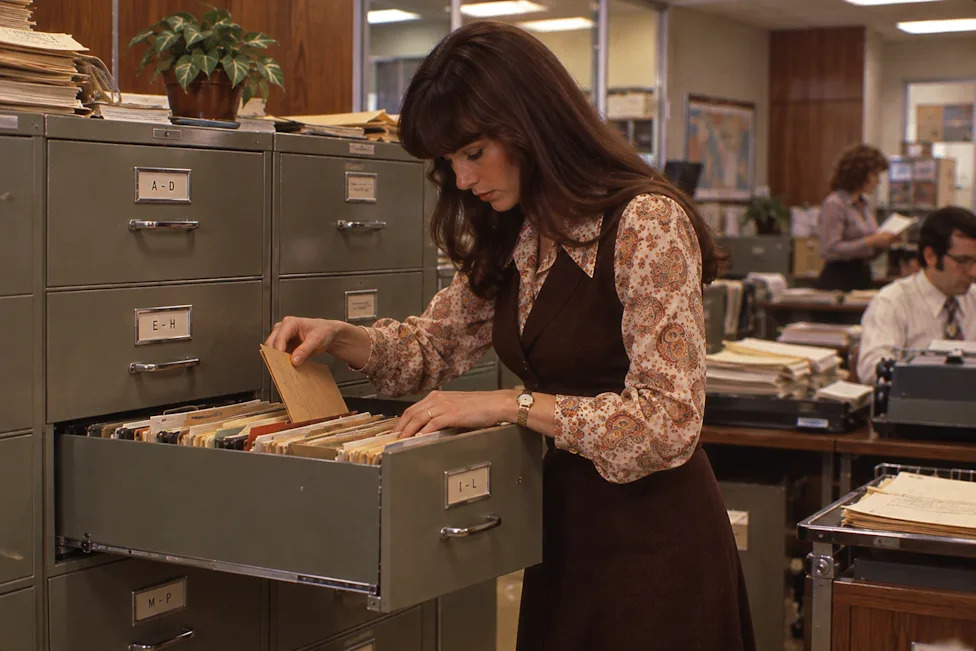
12 Office Tasks From the 1970s That Technology Made Obsolete
Recent coverage highlights twelve routine office tasks from the 1970s that have become obsolete due to technological advancement.
The story
in brief.
What happened, who it affects, and why it landed on our intelligence desk — in plain English, sixty seconds or less.
Recent coverage highlights twelve routine office tasks from the 1970s that have become obsolete due to technological advancement. The report contrasts historical administrative methods with modern digital alternatives, illustrating how automation has replaced manual processes such as typewriting and physical filing. This analysis serves as a retrospective on workplace evolution, demonstrating the significant shift from labour-intensive routines to efficient, technology-driven operations. Professionals can use this overview to understand the historical context of current digital workflows and appreciate the scale of change in administrative efficiency over the past five decades.
Indicative index of skill mentions in professional job postings for the field this story moves (2019 = 1)
What this means
for your career.
Every headline redistributes opportunity. Here is who this one rewards — and how to be on the right side of it.
This retrospective underscores that automation is not a new phenomenon but an accelerating force. To remain relevant, you must shift focus from routine execution to strategic oversight. Manual tasks are vanishing; therefore, your value lies in managing complex systems and interpreting data. Prioritise upskilling in digital literacy and process optimisation. Identify repetitive elements in your current role and explore automation tools to handle them. Develop soft skills like critical thinking and adaptability, which machines cannot replicate. Engage with continuous learning platforms to stay ahead of technological curves. Proactively seek roles that require human judgement and creative problem-solving. By embracing these changes, you position yourself as an indispensable asset capable of leveraging technology rather than being replaced by it.
For this story, the fields that convert it into pay are Business analysis, Project Management, Data analytics and Cloud computing — exactly the programmes matched below. The chart shows the indicative salary uplift certified professionals report in each of those fields; every one of them is a click away, from £79, finishing in as few as 20 days.
Indicative ranges from published continuing-education salary studies, by field — each field is a recommended course below
Enrol in these
to benefit.
These programmes position you for exactly this shift — online, self-paced, and finishing with a verifiable certificate you can share the day you pass.
 Best match
Certificate in Business analysis
 Recommended
Certificate in Project Management
Recommended
Certificate in Data analytics
 Recommended
Certificate in Cloud computing
Launch pricing shown against standard certificate value. The fee you see today is the fee you lock in.
This briefing is based on reporting by Yahoo on 9 Oct, 13:10. Read the original coverage →
Read the news. Then outrun it.
Every LSBR programme is online, self-paced and from £79 — so a headline today can be your credential this month.
