
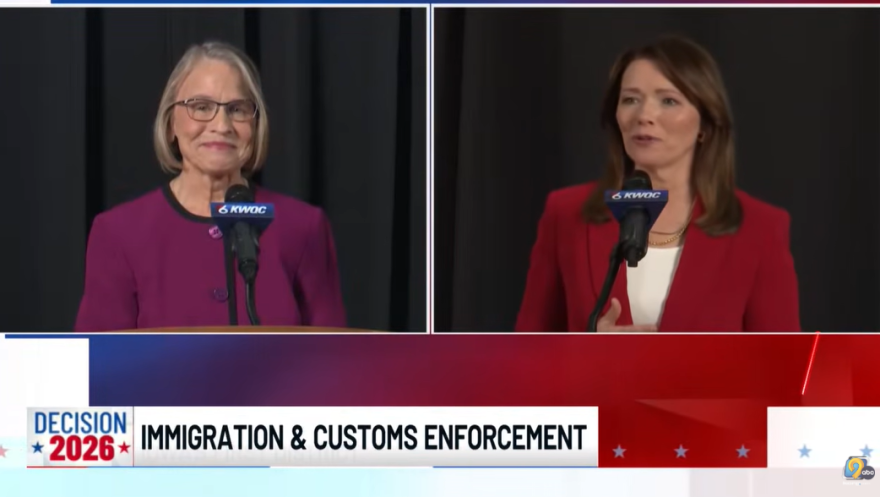
1st Congressional District candidates debate foreign wars, tariffs and healthcare
Candidates for Iowa’s First Congressional District recently debated critical policy issues, including foreign military engagements, tariff implications, and healthcare systems.
The story
in brief.
What happened, who it affects, and why it landed on our intelligence desk — in plain English, sixty seconds or less.
Candidates for Iowa’s First Congressional District recently debated critical policy issues, including foreign military engagements, tariff implications, and healthcare systems. The discussion, reported by Iowa Public Radio, highlights the significant divergence in strategic approaches among contenders. For professionals monitoring political developments, this debate underscores the intersection of economic policy and public health. Understanding these legislative priorities is essential for anticipating regulatory shifts that may affect industry operations. The neutral reporting provides a clear overview of candidate positions without sensationalism, allowing stakeholders to assess potential impacts on their respective sectors based on factual policy proposals rather than rhetorical flourishes.
Indicative index of skill mentions in professional job postings for the field this story moves (2019 = 1)
What this means
for your career.
Every headline redistributes opportunity. Here is who this one rewards — and how to be on the right side of it.
You must recognise how legislative debates directly influence your career trajectory. With tariffs and healthcare at the forefront, professionals in supply chain, finance, and health sectors face immediate uncertainty. You should prioritise skills in risk management and regulatory compliance to navigate these shifts effectively. Monitor policy developments closely, as they dictate market stability and operational requirements. Engage with local political updates to anticipate regulatory changes before they occur. Consider upskilling in areas like strategic sourcing or healthcare management to remain resilient. Your ability to adapt to policy-driven market fluctuations will determine your professional value. Stay informed, analyse the implications for your industry, and adjust your strategic planning accordingly to mitigate potential disruptions.
For this story, the fields that convert it into pay are Risk Management, Healthcare Management, Supply Chain and Public Administration — exactly the programmes matched below. The chart shows the indicative salary uplift certified professionals report in each of those fields; every one of them is a click away, from £79, finishing in as few as 20 days.
Indicative ranges from published continuing-education salary studies, by field — each field is a recommended course below
Enrol in these
to benefit.
These programmes position you for exactly this shift — online, self-paced, and finishing with a verifiable certificate you can share the day you pass.
 Best match
Certificate in Risk Management
 Recommended
Certificate in Healthcare Management
 Recommended
Certificate in Supply Chain
 Recommended
Certificate in Public Administration
Launch pricing shown against standard certificate value. The fee you see today is the fee you lock in.
This briefing is based on reporting by Iowa Public Radio on 21 Oct, 17:42. Read the original coverage →
Read the news. Then outrun it.
Every LSBR programme is online, self-paced and from £79 — so a headline today can be your credential this month.
