
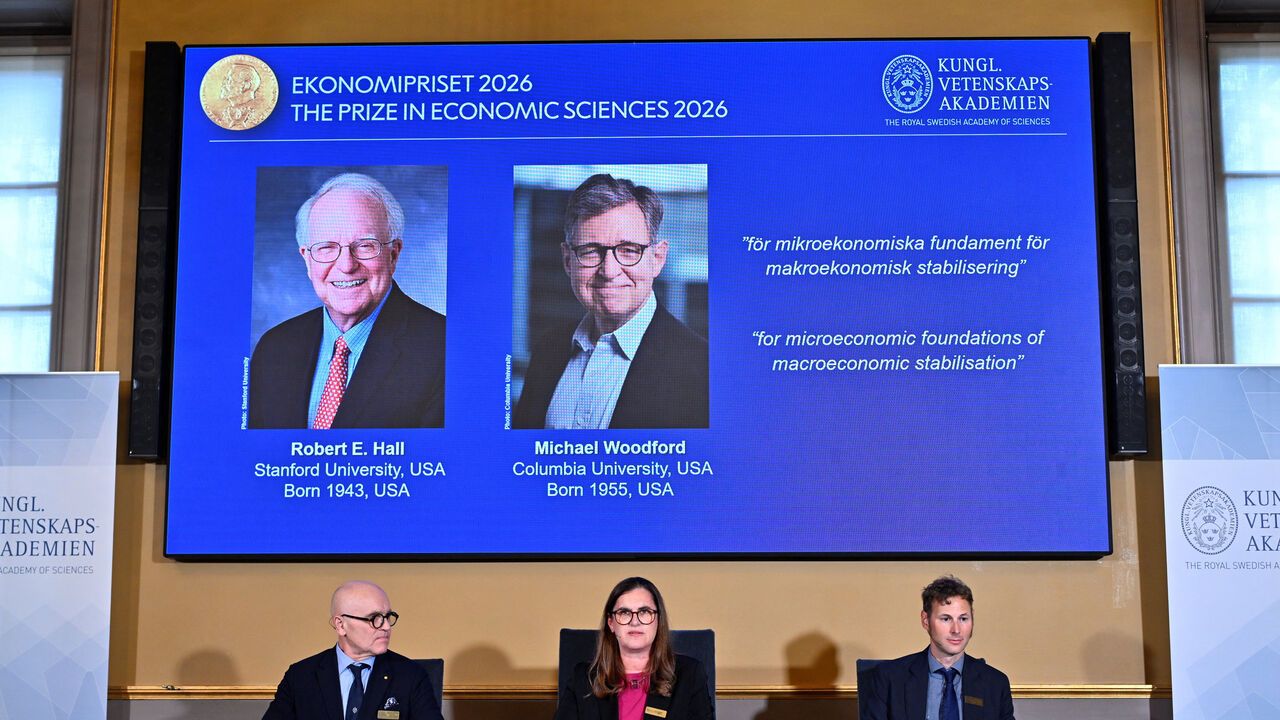
A Nobel prize for how to keep economies on an even keel
The Nobel Memorial Prize in Economic Sciences has been awarded for foundational research on macroeconomic stabilisation.
The story
in brief.
What happened, who it affects, and why it landed on our intelligence desk — in plain English, sixty seconds or less.
The Nobel Memorial Prize in Economic Sciences has been awarded for foundational research on macroeconomic stabilisation. The laureates developed frameworks to understand how economies respond to shocks and how policy can maintain stability. This recognition underscores the enduring importance of rigorous economic theory in managing inflation, employment, and growth. For professionals, it signals that robust analytical models remain critical for navigating volatile global markets and informing strategic decision-making in an uncertain economic landscape.
Indicative index of skill mentions in professional job postings for the field this story moves (2019 = 1)
What this means
for your career.
Every headline redistributes opportunity. Here is who this one rewards — and how to be on the right side of it.
This award elevates the strategic value of macroeconomic literacy. You must understand how broader economic forces impact your sector’s stability. Professionals in finance, policy, and senior management should prioritise advanced economic analysis. Upskill in quantitative methods to interpret market signals accurately. Engage with data-driven forecasting tools to anticipate regulatory shifts. Do not ignore the human element; combine hard data with behavioural insights. Review your organisation’s risk frameworks to ensure they reflect current economic realities. Build cross-functional teams that bridge economic theory and operational execution. Your ability to translate complex economic trends into actionable business strategy will distinguish you as a leader capable of steering through uncertainty.
For this story, the fields that convert it into pay are Finance, Data analytics, Risk Management and Business analysis — exactly the programmes matched below. The chart shows the indicative salary uplift certified professionals report in each of those fields; every one of them is a click away, from £79, finishing in as few as 20 days.
Indicative ranges from published continuing-education salary studies, by field — each field is a recommended course below
Enrol in these
to benefit.
These programmes position you for exactly this shift — online, self-paced, and finishing with a verifiable certificate you can share the day you pass.
 Best match
Certificate in Finance
Recommended
Certificate in Data analytics
Recommended
Certificate in Risk Management
 Recommended
Certificate in Business analysis
Launch pricing shown against standard certificate value. The fee you see today is the fee you lock in.
This briefing is based on reporting by The Economist on 12 Oct, 16:29. Read the original coverage →
Read the news. Then outrun it.
Every LSBR programme is online, self-paced and from £79 — so a headline today can be your credential this month.
