
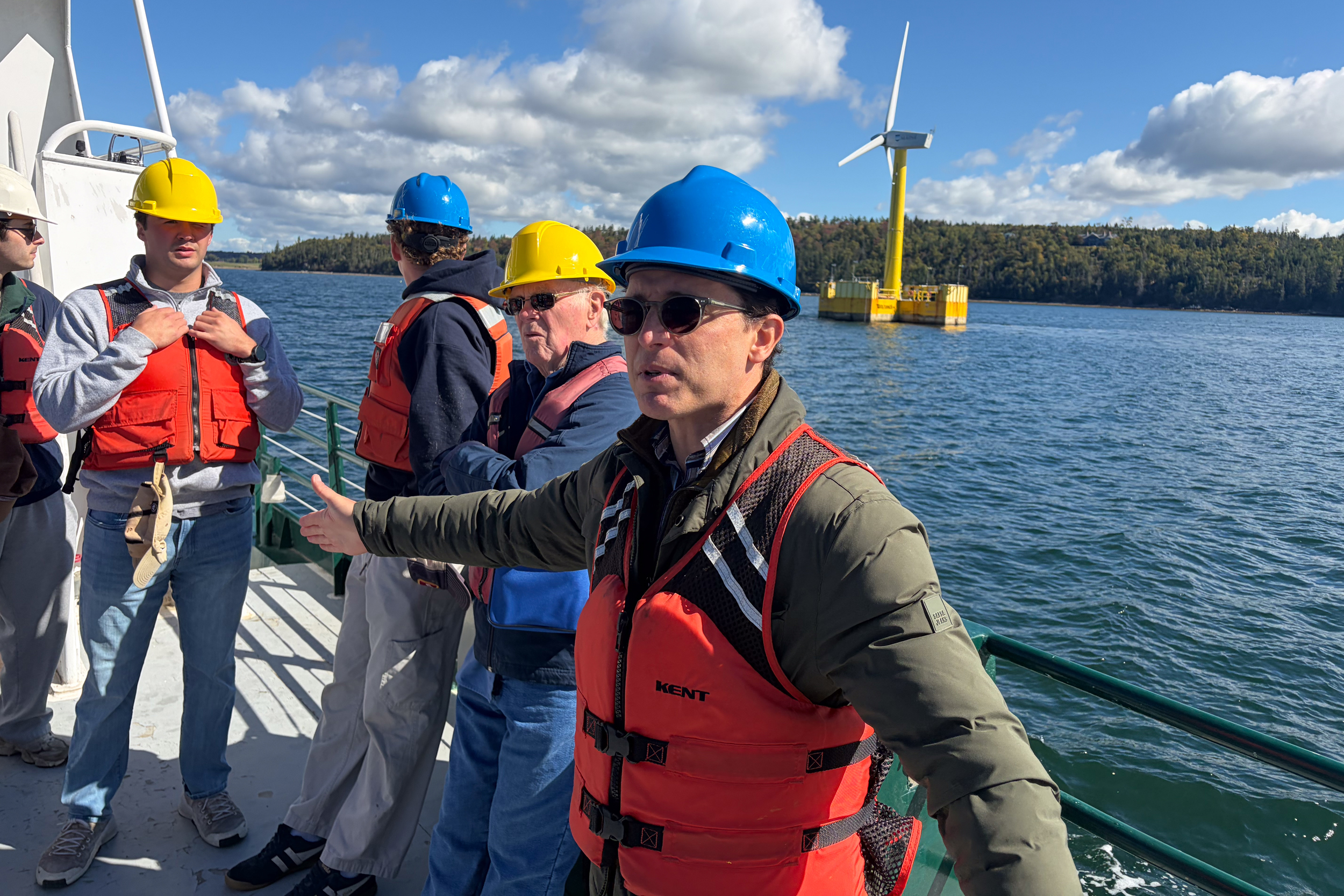
A Rising Tide Lifted Floating Wind Turbines. Now Comes the Real Test.
Floating offshore wind technology has transitioned from experimental prototypes to commercially viable projects, marking a significant milestone in renewable energy infrastructure.
The story
in brief.
What happened, who it affects, and why it landed on our intelligence desk — in plain English, sixty seconds or less.
Floating offshore wind technology has transitioned from experimental prototypes to commercially viable projects, marking a significant milestone in renewable energy infrastructure. Recent reports highlight that while engineering hurdles regarding mooring and foundation systems have been largely overcome, the sector now faces critical challenges in scaling production and reducing costs. This shift signals a move from pilot phases to broader market deployment, requiring robust supply chains and regulatory frameworks to support large-scale installation across deeper waters where fixed turbines are not feasible.
Indicative index of skill mentions in professional job postings for the field this story moves (2019 = 1)
What this means
for your career.
Every headline redistributes opportunity. Here is who this one rewards — and how to be on the right side of it.
This transition from innovation to commercialisation creates immediate demand for professionals who can manage complex, high-stakes engineering projects. You should focus on developing skills in project management and risk assessment, as scaling floating wind involves navigating volatile supply chains and stringent safety regulations. Engineers and project managers must adapt to new technical standards for offshore environments. If you are in finance or law, understanding the unique investment models and regulatory landscapes for marine renewables will differentiate you. A smart professional would now upskill in project management frameworks specifically tailored for large-scale infrastructure, ensuring you can deliver these complex assets on time and within budget amidst evolving technical requirements.
For this story, the fields that convert it into pay are Project Management, Risk Management, Engineering and AI in Energy — exactly the programmes matched below. The chart shows the indicative salary uplift certified professionals report in each of those fields; every one of them is a click away, from £79, finishing in as few as 20 days.
Indicative ranges from published continuing-education salary studies, by field — each field is a recommended course below
Enrol in these
to benefit.
These programmes position you for exactly this shift — online, self-paced, and finishing with a verifiable certificate you can share the day you pass.
 Best match
Certificate in Project Management
Recommended
Certificate in Risk Management
 Recommended
Certificate in Engineering
 Recommended
Certificate in AI in Energy
Launch pricing shown against standard certificate value. The fee you see today is the fee you lock in.
This briefing is based on reporting by Inside Climate News on 18 Oct, 08:55. Read the original coverage →
Read the news. Then outrun it.
Every LSBR programme is online, self-paced and from £79 — so a headline today can be your credential this month.
