
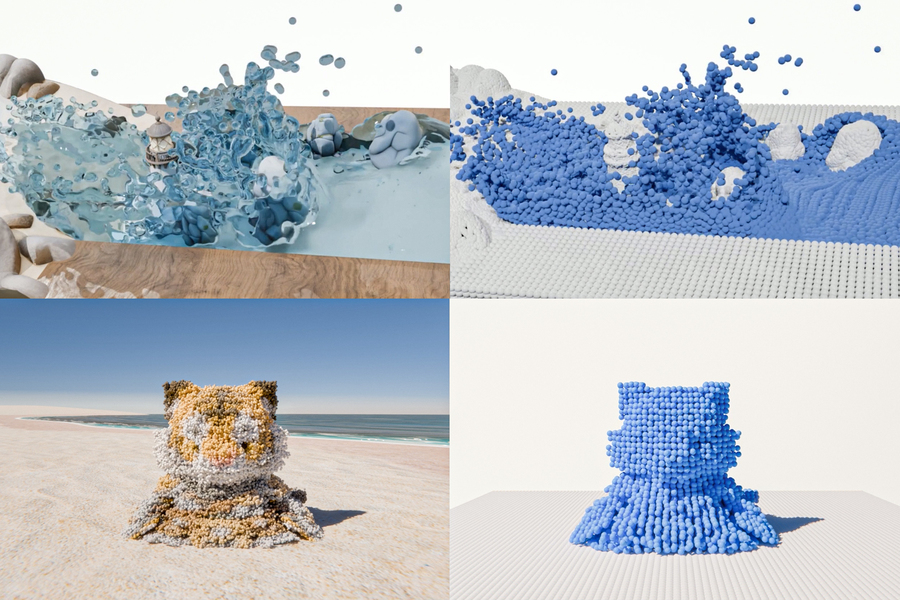
A single AI model simulates the behavior of many substances, from sliding sand to folding proteins
Researchers at MIT have developed a universal AI model capable of simulating the behaviour of diverse physical substances, ranging from granular materials like sliding sand to complex biological structures such as folding proteins.
The story
in brief.
What happened, who it affects, and why it landed on our intelligence desk — in plain English, sixty seconds or less.
Researchers at MIT have developed a universal AI model capable of simulating the behaviour of diverse physical substances, ranging from granular materials like sliding sand to complex biological structures such as folding proteins. This breakthrough suggests that a single algorithmic framework can accurately predict interactions across vastly different scales and states of matter. The technology potentially streamlines computational modelling by replacing multiple specialised simulations with one cohesive system. For professionals, this indicates a significant shift in how material science and biological processes are analysed, offering faster, more efficient tools for research and development without compromising accuracy.
Indicative index of skill mentions in professional job postings for the field this story moves (2019 = 1)
What this means
for your career.
Every headline redistributes opportunity. Here is who this one rewards — and how to be on the right side of it.
This development signals a pivotal shift in computational modelling, elevating the value of professionals who bridge AI and physical sciences. You must understand how foundational models apply to material science and biology. If you work in pharmaceuticals, engineering, or advanced manufacturing, prioritise upskilling in machine learning principles and data science. Do not merely observe; actively integrate these tools into your workflow. Start by learning how to interpret simulation outputs and collaborate with data engineers. Professionals who master these interdisciplinary skills will lead innovation, while those who ignore this convergence risk obsolescence. Your next step is to explore courses that connect artificial intelligence with domain-specific applications, ensuring you remain competitive in an increasingly automated research landscape.
For this story, the fields that convert it into pay are Artificial Intelligence, Data Science, AI in Pharmaceuticals and AI in Engineering — exactly the programmes matched below. The chart shows the indicative salary uplift certified professionals report in each of those fields; every one of them is a click away, from £79, finishing in as few as 20 days.
Indicative ranges from published continuing-education salary studies, by field — each field is a recommended course below
Enrol in these
to benefit.
These programmes position you for exactly this shift — online, self-paced, and finishing with a verifiable certificate you can share the day you pass.
 Best match
Certificate in Artificial Intelligence
 Recommended
Certificate in Data Science
 Recommended
Certificate in AI in Pharmaceuticals
 Recommended
Certificate in AI in Engineering
Launch pricing shown against standard certificate value. The fee you see today is the fee you lock in.
This briefing is based on reporting by MIT News on 9 Nov, 05:00. Read the original coverage →
Read the news. Then outrun it.
Every LSBR programme is online, self-paced and from £79 — so a headline today can be your credential this month.
