
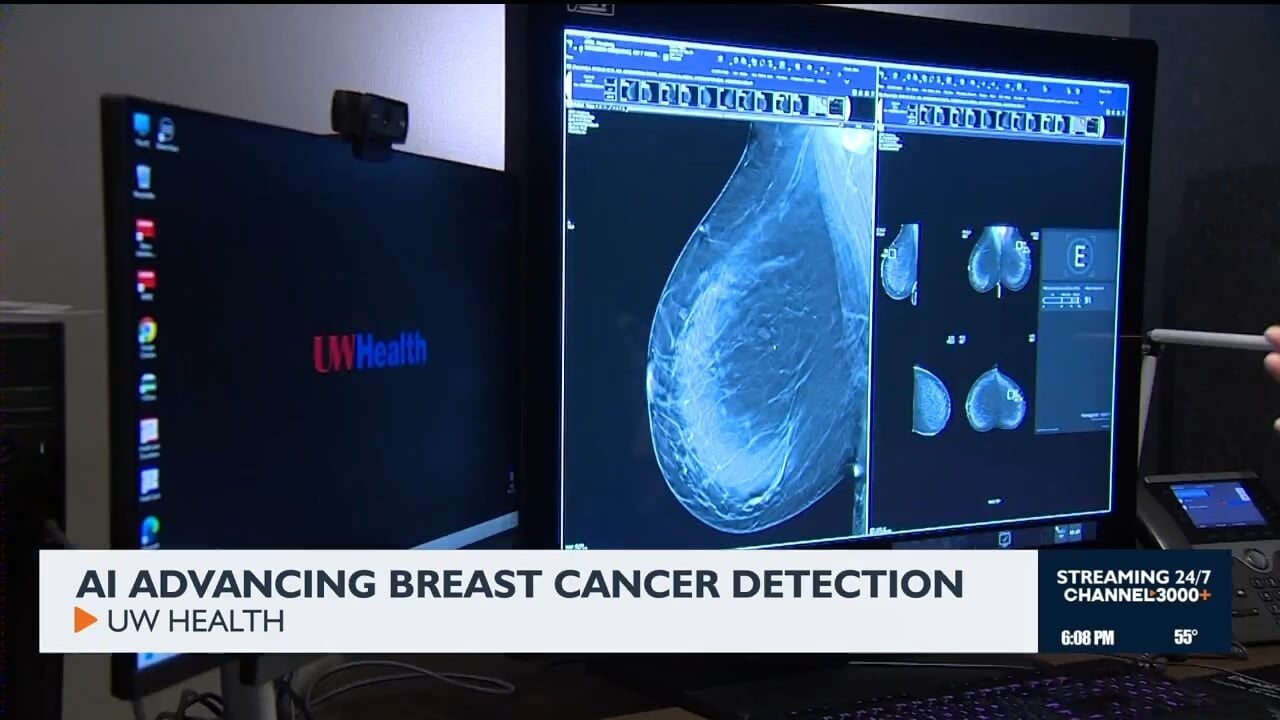
AI-assisted mammogram readings help detect breast cancer earlier
Recent reporting indicates that artificial intelligence tools are increasingly assisting radiologists in interpreting mammograms.
The story
in brief.
What happened, who it affects, and why it landed on our intelligence desk — in plain English, sixty seconds or less.
Recent reporting indicates that artificial intelligence tools are increasingly assisting radiologists in interpreting mammograms. These systems help identify subtle signs of breast cancer at earlier stages than traditional methods alone. The technology acts as a second pair of eyes, flagging potential anomalies for human review. This development aims to reduce diagnostic errors and improve patient outcomes through faster, more accurate detection. The integration of AI into routine screening processes represents a significant shift in radiological practice, enhancing clinical workflows without replacing the essential role of medical professionals in final decision-making and patient care.
Indicative index of skill mentions in professional job postings for the field this story moves (2019 = 1)
What this means
for your career.
Every headline redistributes opportunity. Here is who this one rewards — and how to be on the right side of it.
This shift demands that healthcare professionals adapt to AI-augmented workflows. Your clinical expertise remains vital, but you must now interpret algorithmic outputs critically. Radiologists and nurses should prioritise upskilling in digital literacy and data interpretation. Understand how these models function to trust their suggestions appropriately. For career growth, focus on bridging the gap between clinical practice and technology. Learn to evaluate AI tools for bias and accuracy. This positions you as a leader in modernising patient care. Do not view AI as a threat, but as a powerful diagnostic partner. Proactively seek training in health informatics to stay ahead. Your ability to manage this human-machine collaboration will define your professional relevance and value in the next decade of medicine.
For this story, the fields that convert it into pay are AI in Healthcare, Healthcare Management, Data Science and Artificial Intelligence — exactly the programmes matched below. The chart shows the indicative salary uplift certified professionals report in each of those fields; every one of them is a click away, from £79, finishing in as few as 20 days.
Indicative ranges from published continuing-education salary studies, by field — each field is a recommended course below
Enrol in these
to benefit.
These programmes position you for exactly this shift — online, self-paced, and finishing with a verifiable certificate you can share the day you pass.
 Best match
Certificate in AI in Healthcare
 Recommended
Certificate in Healthcare Management
 Recommended
Certificate in Data Science
 Recommended
Certificate in Artificial Intelligence
Launch pricing shown against standard certificate value. The fee you see today is the fee you lock in.
This briefing is based on reporting by Channel 3000 on 31 Oct, 23:59. Read the original coverage →
Read the news. Then outrun it.
Every LSBR programme is online, self-paced and from £79 — so a headline today can be your credential this month.
