
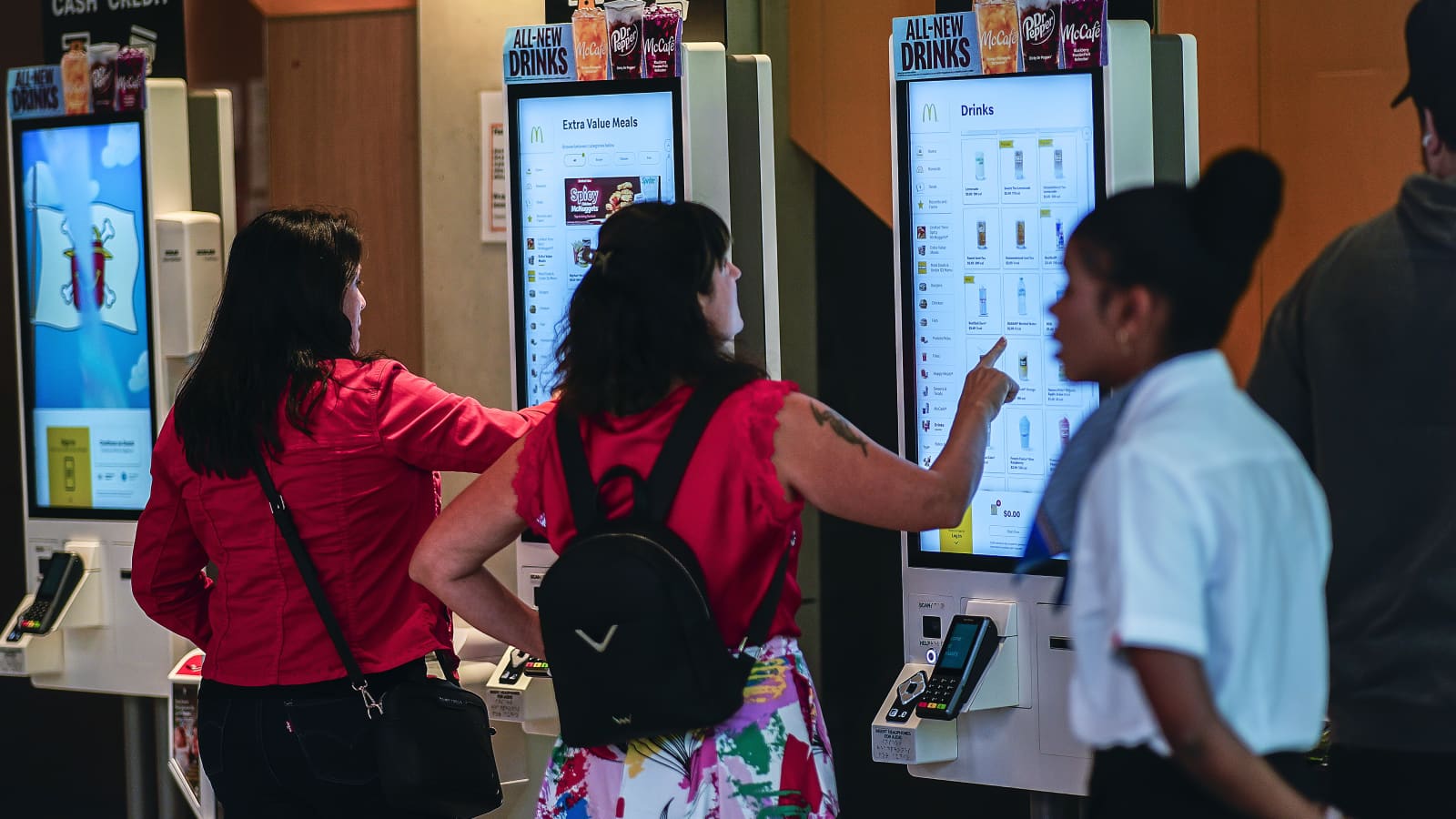
AI may change the price of your Big Mac and groceries — what this means for shoppers
Recent reporting suggests that artificial intelligence integration within food service and grocery sectors is poised to influence pricing structures for everyday items.
The story
in brief.
What happened, who it affects, and why it landed on our intelligence desk — in plain English, sixty seconds or less.
Recent reporting suggests that artificial intelligence integration within food service and grocery sectors is poised to influence pricing structures for everyday items. The analysis indicates that automation and algorithmic efficiency may reduce operational costs, potentially lowering prices for consumers on staples like fast food and supermarket goods. This shift reflects broader technological adoption in retail and hospitality supply chains, where AI optimises inventory, labour scheduling, and demand forecasting. For professionals, this signals a significant transformation in how consumer goods are priced and distributed, highlighting the growing economic impact of automated decision-making systems on traditional retail margins and consumer expenditure patterns.
Indicative index of skill mentions in professional job postings for the field this story moves (2019 = 1)
What this means
for your career.
Every headline redistributes opportunity. Here is who this one rewards — and how to be on the right side of it.
This development signals that operational efficiency driven by AI is no longer theoretical; it directly impacts consumer costs and business margins. You must understand how these technologies reshape pricing strategies and supply chain dynamics. Professionals in retail, hospitality, and procurement should prioritise skills in data-driven decision-making and process optimisation. To stay relevant, you should deepen your knowledge of how AI tools integrate with existing workflows to reduce waste and labour costs. Focus on interpreting data analytics to inform strategic pricing and inventory management. A smart professional would immediately upskill in AI applications specific to their sector, ensuring they can leverage these tools for competitive advantage. Ignoring this shift risks obsolescence in roles centred on manual forecasting or traditional cost management.
For this story, the fields that convert it into pay are AI in Retail, AI in Supply Chain, Data analytics and Business analysis — exactly the programmes matched below. The chart shows the indicative salary uplift certified professionals report in each of those fields; every one of them is a click away, from £79, finishing in as few as 20 days.
Indicative ranges from published continuing-education salary studies, by field — each field is a recommended course below
Enrol in these
to benefit.
These programmes position you for exactly this shift — online, self-paced, and finishing with a verifiable certificate you can share the day you pass.
 Best match
Certificate in AI in Retail
 Recommended
Certificate in AI in Supply Chain
 Recommended
Certificate in Data analytics
 Recommended
Certificate in Business analysis
Launch pricing shown against standard certificate value. The fee you see today is the fee you lock in.
This briefing is based on reporting by CNBC on 11 Oct, 05:00. Read the original coverage →
Read the news. Then outrun it.
Every LSBR programme is online, self-paced and from £79 — so a headline today can be your credential this month.
