
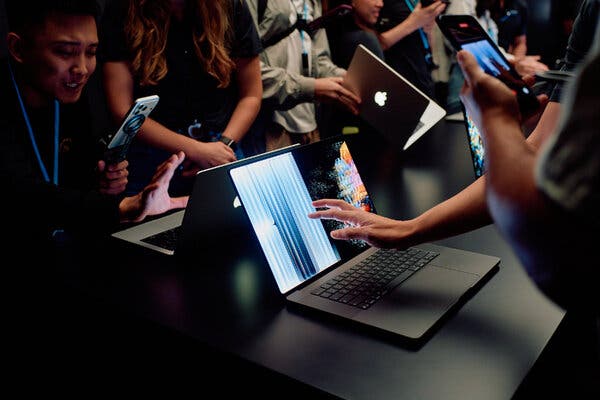
Apple Unveils Its First Touch-Screen MacBook Pro
Apple has announced its first MacBook Pro featuring a touch-screen display, marking a significant shift in hardware design for its professional laptop line.
The story
in brief.
What happened, who it affects, and why it landed on our intelligence desk — in plain English, sixty seconds or less.
Apple has announced its first MacBook Pro featuring a touch-screen display, marking a significant shift in hardware design for its professional laptop line. The New York Times reports that this integration aims to enhance user interaction and workflow efficiency. The device represents a departure from traditional input methods, potentially altering how professionals engage with creative and analytical software. This development signals a broader industry trend towards more intuitive, gesture-based computing interfaces. Professionals should note this hardware evolution as it may influence future software design and user experience expectations across the technology sector.
Indicative index of skill mentions in professional job postings for the field this story moves (2019 = 1)
What this means
for your career.
Every headline redistributes opportunity. Here is who this one rewards — and how to be on the right side of it.
This hardware shift demands that you adapt to new interface paradigms. Skills in user experience design and touch-optimised software development will rise in value. You should prioritise understanding gesture-based navigation and responsive design principles. If you work in creative industries, master touch-enabled editing tools to stay competitive. For developers, focus on building applications that leverage touch inputs effectively. Ignore this trend at your peril; employers will seek candidates comfortable with evolving hardware ecosystems. Update your portfolio to showcase projects using modern, interactive interfaces. Enrol in courses that bridge hardware and software interaction. Stay agile, as this move likely precedes broader industry adoption. Proactively learning these skills ensures you remain relevant in a rapidly transforming digital workplace.
For this story, the fields that convert it into pay are Engineering, Innovation, Business and Management and AI in Design — exactly the programmes matched below. The chart shows the indicative salary uplift certified professionals report in each of those fields; every one of them is a click away, from £79, finishing in as few as 20 days.
Indicative ranges from published continuing-education salary studies, by field — each field is a recommended course below
Enrol in these
to benefit.
These programmes position you for exactly this shift — online, self-paced, and finishing with a verifiable certificate you can share the day you pass.
 Best match
Certificate in Engineering
 Recommended
Certificate in Innovation
 Recommended
Certificate in Business and Management
 Recommended
Certificate in AI in Design
Launch pricing shown against standard certificate value. The fee you see today is the fee you lock in.
This briefing is based on reporting by The New York Times on 28 Oct, 18:30. Read the original coverage →
Read the news. Then outrun it.
Every LSBR programme is online, self-paced and from £79 — so a headline today can be your credential this month.
