
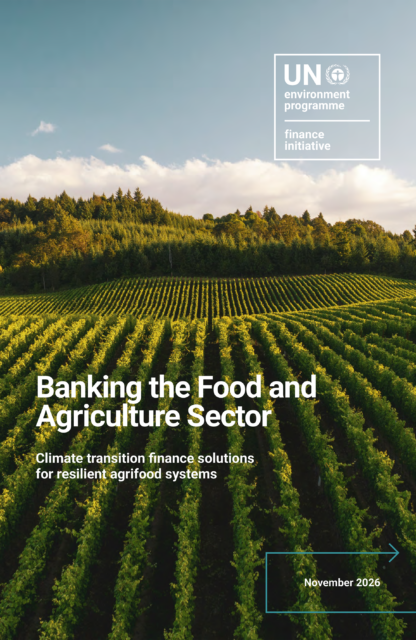
Banking the Food and Agriculture Sector: Climate Transition Finance Solutions for Resilient Agrifood Systems
The United Nations Environment Programme Finance Initiative highlights emerging climate transition finance solutions designed to bolster resilient agrifood systems.
The story
in brief.
What happened, who it affects, and why it landed on our intelligence desk — in plain English, sixty seconds or less.
The United Nations Environment Programme Finance Initiative highlights emerging climate transition finance solutions designed to bolster resilient agrifood systems. This initiative addresses the critical need for sustainable investment in the food and agriculture sector, aiming to mitigate climate risks while ensuring food security. It outlines how financial institutions can support the transition towards low-carbon, climate-resilient agricultural practices. The report serves as a strategic guide for bankers and investors seeking to align capital with environmental sustainability goals, offering frameworks for assessing and funding projects that enhance systemic resilience against climate-related disruptions.
Indicative index of skill mentions in professional job postings for the field this story moves (2019 = 1)
What this means
for your career.
Every headline redistributes opportunity. Here is who this one rewards — and how to be on the right side of it.
This shift signals a major career pivot for finance and supply chain professionals. You must now understand how climate risk intersects with agricultural lending. Specialists who can assess environmental impact alongside financial returns will command premium salaries. If you work in banking, upskill in sustainability metrics and ESG reporting immediately. Supply chain managers should focus on resilience planning and carbon footprint analysis. Do not ignore this trend; regulatory pressure is mounting. A smart professional would pursue certifications in green finance or sustainable supply chain management today. This knowledge transforms you from a traditional operator into a strategic advisor capable of navigating the complex regulatory and ethical landscape of modern agrifood investment, securing your relevance in a rapidly evolving market.
For this story, the fields that convert it into pay are Finance, Supply Chain, Risk Management and Business and Management — exactly the programmes matched below. The chart shows the indicative salary uplift certified professionals report in each of those fields; every one of them is a click away, from £79, finishing in as few as 20 days.
Indicative ranges from published continuing-education salary studies, by field — each field is a recommended course below
Enrol in these
to benefit.
These programmes position you for exactly this shift — online, self-paced, and finishing with a verifiable certificate you can share the day you pass.
 Best match
Certificate in Finance
 Recommended
Certificate in Supply Chain
Recommended
Certificate in Risk Management
 Recommended
Certificate in Business and Management
Launch pricing shown against standard certificate value. The fee you see today is the fee you lock in.
This briefing is based on reporting by United Nations Environment Programme Finance Initiative (UNEP FI) on 9 Nov, 13:26. Read the original coverage →
Read the news. Then outrun it.
Every LSBR programme is online, self-paced and from £79 — so a headline today can be your credential this month.
