
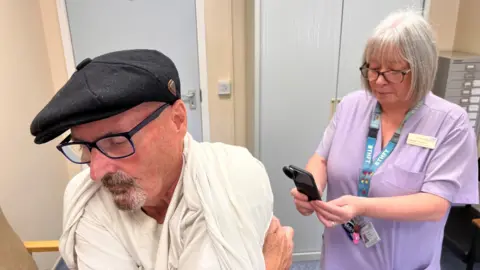
Bradford skin cancer waiting times cut by new AI technology
Bradford’s NHS trust has successfully reduced skin cancer diagnosis waiting times through the implementation of artificial intelligence technology.
The story
in brief.
What happened, who it affects, and why it landed on our intelligence desk — in plain English, sixty seconds or less.
Bradford’s NHS trust has successfully reduced skin cancer diagnosis waiting times through the implementation of artificial intelligence technology. This initiative leverages AI to triage referrals more efficiently, prioritising urgent cases and streamlining clinical workflows. The development highlights a practical application of machine learning within public healthcare services, aiming to improve patient outcomes and operational efficiency. It serves as a case study for how digital innovation can address systemic bottlenecks in medical diagnostics, offering a replicable model for other health providers seeking to enhance service delivery speed and accuracy without compromising clinical standards.
Indicative index of skill mentions in professional job postings for the field this story moves (2019 = 1)
What this means
for your career.
Every headline redistributes opportunity. Here is who this one rewards — and how to be on the right side of it.
This shift signals that healthcare roles increasingly demand digital fluency alongside clinical expertise. If you work in health administration, diagnostics, or policy, you must now understand how AI tools integrate into clinical pathways. Skills in data interpretation and digital process optimisation are rising in value. You should monitor how your organisation adopts similar technologies to improve efficiency. A smart professional would upskill in health informatics or AI governance to bridge the gap between technical implementation and patient care. Engage with cross-functional teams to understand workflow impacts. Proactively learn how to evaluate AI performance metrics. This positions you as a leader in modernising service delivery, ensuring you remain relevant as traditional roles evolve into hybrid technical-clinical functions.
For this story, the fields that convert it into pay are Healthcare Management, AI in Healthcare, Data analytics and Business analysis — exactly the programmes matched below. The chart shows the indicative salary uplift certified professionals report in each of those fields; every one of them is a click away, from £79, finishing in as few as 20 days.
Indicative ranges from published continuing-education salary studies, by field — each field is a recommended course below
Enrol in these
to benefit.
These programmes position you for exactly this shift — online, self-paced, and finishing with a verifiable certificate you can share the day you pass.
 Best match
Certificate in Healthcare Management
 Recommended
Certificate in AI in Healthcare
 Recommended
Certificate in Data analytics
 Recommended
Certificate in Business analysis
Launch pricing shown against standard certificate value. The fee you see today is the fee you lock in.
This briefing is based on reporting by BBC on 5 Oct, 05:15. Read the original coverage →
Read the news. Then outrun it.
Every LSBR programme is online, self-paced and from £79 — so a headline today can be your credential this month.
