
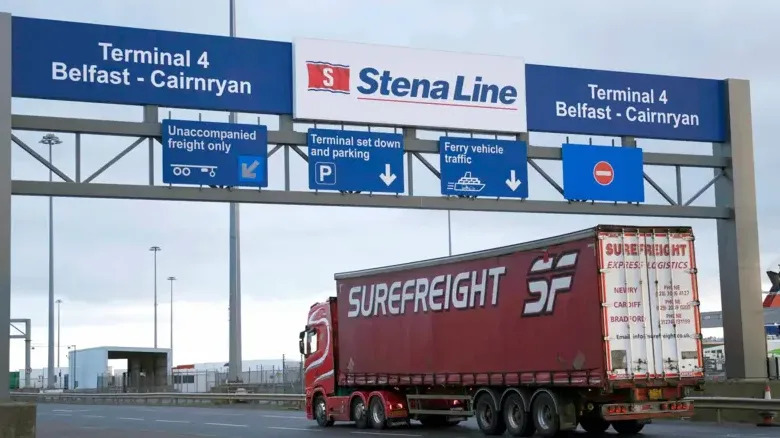
Businesses still struggling with sea border, Stormont reports find
Recent reports from the Stormont assembly indicate that businesses in Northern Ireland continue to face significant operational challenges regarding sea border protocols.
The story
in brief.
What happened, who it affects, and why it landed on our intelligence desk — in plain English, sixty seconds or less.
Recent reports from the Stormont assembly indicate that businesses in Northern Ireland continue to face significant operational challenges regarding sea border protocols. These findings highlight persistent logistical and regulatory hurdles that impede smooth trade flows between the region and mainland Europe. The data suggests that despite ongoing political negotiations, practical difficulties remain unresolved for many commercial entities. This situation creates an environment of uncertainty for companies reliant on maritime transport routes. Professionals must recognise that these border complexities are not merely political abstractions but tangible barriers affecting daily supply chain efficiency and compliance requirements for organisations operating within this specific jurisdiction.
Indicative index of skill mentions in professional job postings for the field this story moves (2019 = 1)
What this means
for your career.
Every headline redistributes opportunity. Here is who this one rewards — and how to be on the right side of it.
You must adapt to a landscape where regulatory uncertainty directly impacts operational efficiency. Professionals in logistics, trade compliance, and supply chain management are now critical assets, as organisations scramble to mitigate border delays. Your ability to navigate complex regulatory frameworks and optimise transport routes will determine your career trajectory. Focus on developing expertise in cross-border trade regulations and risk mitigation strategies. Smart professionals will upskill in supply chain resilience and legal compliance to advise their employers on navigating these persistent hurdles. By positioning yourself as a problem-solver who can reduce friction in maritime trade, you become indispensable. Prioritise certifications that validate your understanding of international trade laws and logistical planning to stay ahead in this challenging market.
For this story, the fields that convert it into pay are Supply Chain, Risk Management, Law and Business and Management — exactly the programmes matched below. The chart shows the indicative salary uplift certified professionals report in each of those fields; every one of them is a click away, from £79, finishing in as few as 20 days.
Indicative ranges from published continuing-education salary studies, by field — each field is a recommended course below
Enrol in these
to benefit.
These programmes position you for exactly this shift — online, self-paced, and finishing with a verifiable certificate you can share the day you pass.
 Best match
Certificate in Supply Chain
 Recommended
Certificate in Risk Management
Recommended
Certificate in Law
 Recommended
Certificate in Business and Management
Launch pricing shown against standard certificate value. The fee you see today is the fee you lock in.
This briefing is based on reporting by Yahoo on 5 Nov, 19:48. Read the original coverage →
Read the news. Then outrun it.
Every LSBR programme is online, self-paced and from £79 — so a headline today can be your credential this month.
