
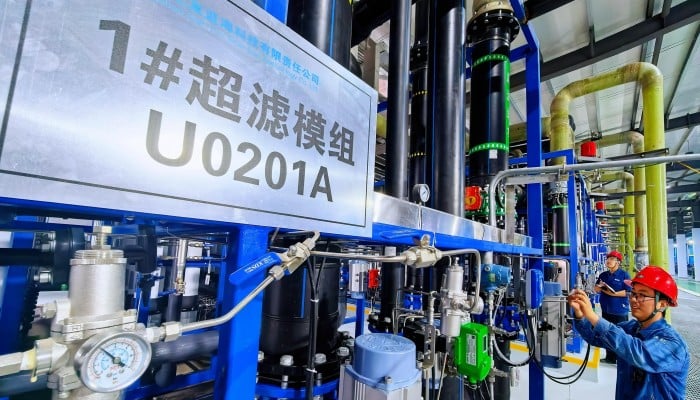
Chinese desalination plant cuts 60% energy use, turns brine into industrial salt
A Chinese desalination facility has successfully reduced its energy consumption by sixty percent while simultaneously converting brine waste into usable industrial salt.
The story
in brief.
What happened, who it affects, and why it landed on our intelligence desk — in plain English, sixty seconds or less.
A Chinese desalination facility has successfully reduced its energy consumption by sixty percent while simultaneously converting brine waste into usable industrial salt. This operational breakthrough demonstrates a significant advancement in resource efficiency and waste valorisation within the water treatment sector. The development highlights a shift towards sustainable industrial practices, where environmental constraints are leveraged to create additional revenue streams. For professionals in the water and energy sectors, this case study offers a concrete example of how technological innovation can drive both cost reduction and circular economy principles, setting a new benchmark for global desalination projects aiming to balance ecological responsibility with economic viability.
Indicative index of skill mentions in professional job postings for the field this story moves (2019 = 1)
What this means
for your career.
Every headline redistributes opportunity. Here is who this one rewards — and how to be on the right side of it.
This breakthrough signals a pivotal shift towards resource efficiency in heavy industry. You must prioritise skills in sustainable engineering and circular economy strategies, as these competencies will become essential for securing leadership roles. Professionals in water management, energy consulting, and industrial operations should monitor this trend closely, as regulatory pressures will likely accelerate adoption. To stay ahead, integrate life-cycle assessment into your project planning and seek certifications in green technology management. Demonstrating the ability to optimise energy use while creating secondary revenue streams will distinguish you from peers. Start by auditing your current projects for similar waste-to-value opportunities, positioning yourself as a proactive driver of sustainable operational excellence.
For this story, the fields that convert it into pay are Engineering, Project Management, Risk Management and AI in Energy — exactly the programmes matched below. The chart shows the indicative salary uplift certified professionals report in each of those fields; every one of them is a click away, from £79, finishing in as few as 20 days.
Indicative ranges from published continuing-education salary studies, by field — each field is a recommended course below
Enrol in these
to benefit.
These programmes position you for exactly this shift — online, self-paced, and finishing with a verifiable certificate you can share the day you pass.
 Best match
Certificate in Engineering
 Recommended
Certificate in Project Management
Recommended
Certificate in Risk Management
 Recommended
Certificate in AI in Energy
Launch pricing shown against standard certificate value. The fee you see today is the fee you lock in.
This briefing is based on reporting by South China Morning Post on 12 Oct, 04:15. Read the original coverage →
Read the news. Then outrun it.
Every LSBR programme is online, self-paced and from £79 — so a headline today can be your credential this month.
