
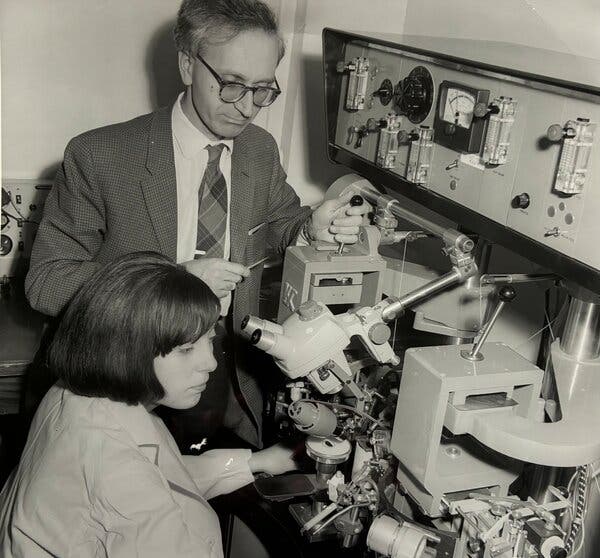
Cyril Hilsum, Who Helped Invent Flat-Panel Displays in TVs and iPhones, Has Died at 101
Cyril Hilsum, a pioneering physicist who co-invented the heterojunction transistor, has died at the age of 101.
The story
in brief.
What happened, who it affects, and why it landed on our intelligence desk — in plain English, sixty seconds or less.
Cyril Hilsum, a pioneering physicist who co-invented the heterojunction transistor, has died at the age of 101. His foundational work at Philips Research Laboratories was instrumental in developing the technology behind modern flat-panel displays, ubiquitous in televisions and smartphones. This story highlights the enduring legacy of mid-century semiconductor research. For professionals, it serves as a reminder of how fundamental scientific breakthroughs drive long-term industrial change. The report underscores the critical role of sustained innovation in electronics, linking historical engineering achievements to contemporary digital infrastructure. It offers a factual overview of Hilsum’s career, his collaboration with colleagues, and the lasting impact of his contributions to global technology standards and consumer electronics markets today.
Indicative index of skill mentions in professional job postings for the field this story moves (2019 = 1)
What this means
for your career.
Every headline redistributes opportunity. Here is who this one rewards — and how to be on the right side of it.
Hilsum’s legacy reminds you that foundational engineering drives digital economies. As display technologies evolve, the demand for deep technical expertise in semiconductor physics and materials science rises. You should prioritise understanding the hardware underpinning AI and IoT devices, not just software applications. Professionals in hardware development must master precision engineering and supply chain resilience. If you work in tech strategy, study how legacy innovations create new markets. Invest in continuous learning in electrical engineering to future-proof your career. Recognise that physical infrastructure remains critical despite the cloud era. Build cross-disciplinary skills combining hardware knowledge with data analytics. This holistic approach positions you to lead in an increasingly integrated technological landscape, ensuring your relevance beyond fleeting software trends.
For this story, the fields that convert it into pay are Engineering, AI in Engineering, Innovation and Business and Management — exactly the programmes matched below. The chart shows the indicative salary uplift certified professionals report in each of those fields; every one of them is a click away, from £79, finishing in as few as 20 days.
Indicative ranges from published continuing-education salary studies, by field — each field is a recommended course below
Enrol in these
to benefit.
These programmes position you for exactly this shift — online, self-paced, and finishing with a verifiable certificate you can share the day you pass.
 Best match
Certificate in Engineering
 Recommended
Certificate in AI in Engineering
 Recommended
Certificate in Innovation
 Recommended
Certificate in Business and Management
Launch pricing shown against standard certificate value. The fee you see today is the fee you lock in.
This briefing is based on reporting by The New York Times on 1 Nov, 10:00. Read the original coverage →
Read the news. Then outrun it.
Every LSBR programme is online, self-paced and from £79 — so a headline today can be your credential this month.
