
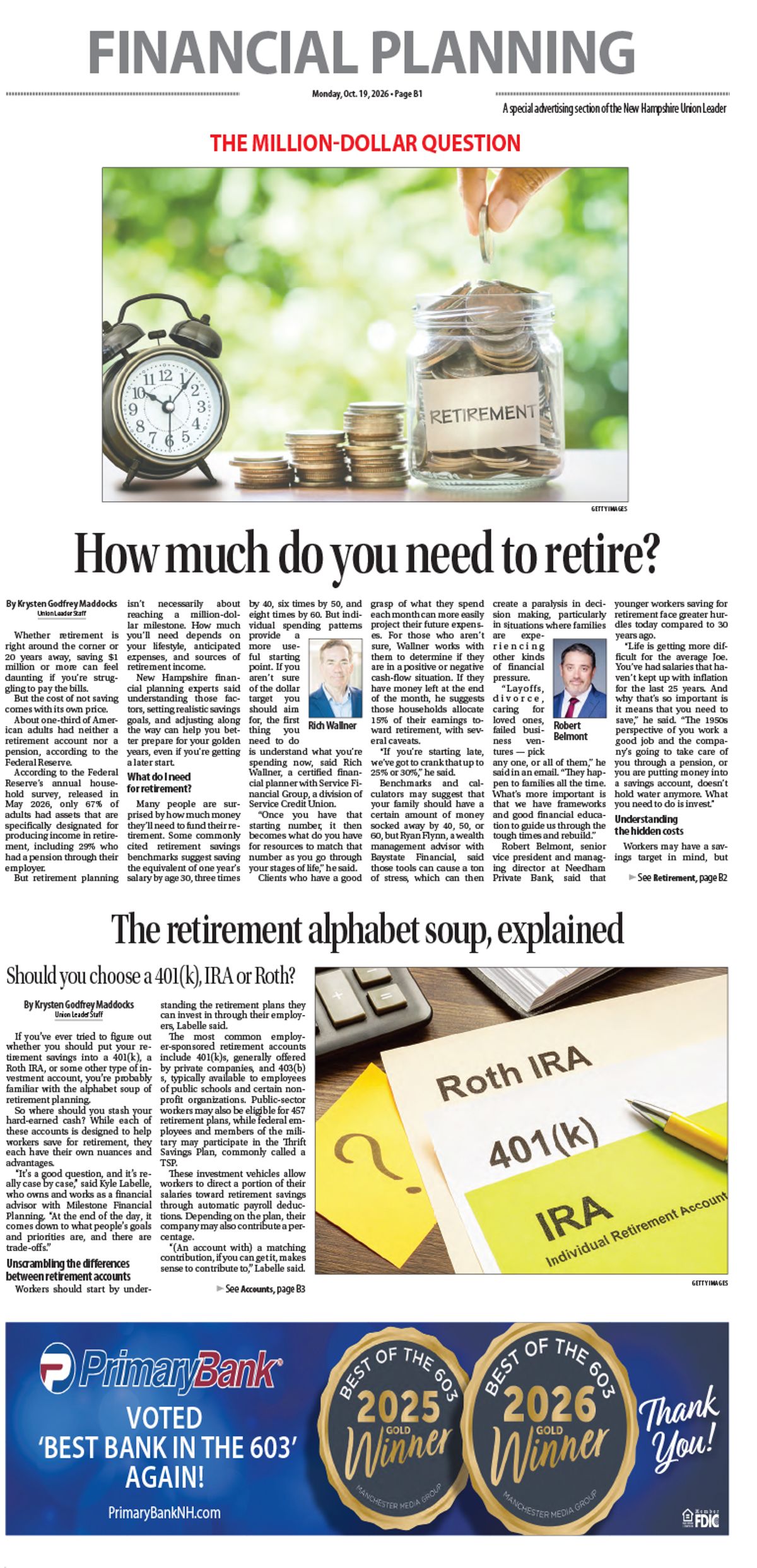
Financial Planning
The New Hampshire Union Leader reports on evolving trends within the financial planning sector, highlighting how professionals are adapting to new regulatory frameworks and digital tools.
The story
in brief.
What happened, who it affects, and why it landed on our intelligence desk — in plain English, sixty seconds or less.
The New Hampshire Union Leader reports on evolving trends within the financial planning sector, highlighting how professionals are adapting to new regulatory frameworks and digital tools. This coverage underscores the increasing complexity of client needs and the necessity for certified advisors to maintain rigorous ethical standards. The article examines the current state of wealth management services, noting a shift towards more personalised, data-driven advice. It provides a factual overview of the industry’s response to market volatility, ensuring that readers understand the baseline requirements for delivering compliant and effective financial strategies in the modern economic landscape.
Indicative index of skill mentions in professional job postings for the field this story moves (2019 = 1)
What this means
for your career.
Every headline redistributes opportunity. Here is who this one rewards — and how to be on the right side of it.
This development signals that technical proficiency alone is no longer sufficient for career longevity in finance. You must prioritise advisory skills and regulatory compliance over pure transactional execution. Professionals in wealth management should immediately review their certification status and deepen their understanding of fiduciary duties. Those in related sectors should observe how personalised data analytics are reshaping client expectations. To stay competitive, you need to integrate behavioural finance insights into your practice. Invest time in understanding ethical guidelines and digital planning tools. This shift rewards those who can blend technical expertise with empathetic communication, making soft skills as valuable as quantitative analysis in securing long-term client relationships.
For this story, the fields that convert it into pay are Finance and Accounting, Risk Management, Business and Management and Data analytics — exactly the programmes matched below. The chart shows the indicative salary uplift certified professionals report in each of those fields; every one of them is a click away, from £79, finishing in as few as 20 days.
Indicative ranges from published continuing-education salary studies, by field — each field is a recommended course below
Enrol in these
to benefit.
These programmes position you for exactly this shift — online, self-paced, and finishing with a verifiable certificate you can share the day you pass.
 Best match
Certificate in Finance and Accounting
Recommended
Certificate in Risk Management
 Recommended
Certificate in Business and Management
Recommended
Certificate in Data analytics
Launch pricing shown against standard certificate value. The fee you see today is the fee you lock in.
This briefing is based on reporting by New Hampshire Union Leader on 19 Oct, 12:46. Read the original coverage →
Read the news. Then outrun it.
Every LSBR programme is online, self-paced and from £79 — so a headline today can be your credential this month.
