
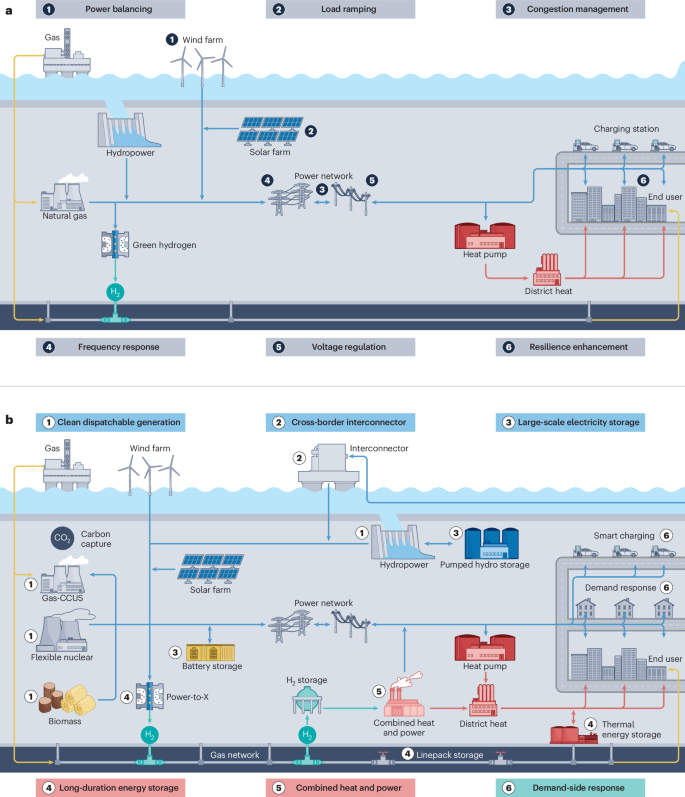
Flexibility technologies in clean energy systems
Recent Nature analysis highlights how flexibility technologies, such as advanced storage and demand response, are becoming critical for stabilising clean energy grids.
The story
in brief.
What happened, who it affects, and why it landed on our intelligence desk — in plain English, sixty seconds or less.
Recent Nature analysis highlights how flexibility technologies, such as advanced storage and demand response, are becoming critical for stabilising clean energy grids. As renewable penetration increases, system operators must manage intermittency more effectively. The report details emerging hardware and software solutions that enable real-time balancing of supply and demand. This shift moves the energy sector away from rigid infrastructure towards dynamic, responsive networks. Professionals should note that technical integration and operational agility are now paramount. The study underscores that future grid resilience depends on these adaptive technologies rather than solely on increasing generation capacity. This represents a fundamental structural change in how energy systems are designed, managed, and maintained across global markets.
Indicative index of skill mentions in professional job postings for the field this story moves (2019 = 1)
What this means
for your career.
Every headline redistributes opportunity. Here is who this one rewards — and how to be on the right side of it.
This shift signals that traditional engineering roles are evolving. You must now understand digital grid integration, not just physical infrastructure. Demand response and storage management are becoming core competencies. Professionals in energy should upskill in data analytics to interpret real-time grid behaviour. If you work in project management, learn how to coordinate complex tech deployments. Smart professionals will immediately explore courses on AI in Energy to grasp predictive modelling for load balancing. You should also consider Risk Management training to navigate regulatory changes surrounding grid stability. Do not wait for your employer to dictate this learning path. Take initiative now to master these hybrid technical and strategic skills. Position yourself as a bridge between legacy systems and modern flexible technologies. This proactive approach ensures you remain indispensable as the sector transitions rapidly.
For this story, the fields that convert it into pay are AI in Energy, Engineering, Data analytics and Risk Management — exactly the programmes matched below. The chart shows the indicative salary uplift certified professionals report in each of those fields; every one of them is a click away, from £79, finishing in as few as 20 days.
Indicative ranges from published continuing-education salary studies, by field — each field is a recommended course below
Enrol in these
to benefit.
These programmes position you for exactly this shift — online, self-paced, and finishing with a verifiable certificate you can share the day you pass.
 Best match
Certificate in AI in Energy
 Recommended
Certificate in Engineering
 Recommended
Certificate in Data analytics
Recommended
Certificate in Risk Management
Launch pricing shown against standard certificate value. The fee you see today is the fee you lock in.
This briefing is based on reporting by Nature on 12 Oct, 09:32. Read the original coverage →
Read the news. Then outrun it.
Every LSBR programme is online, self-paced and from £79 — so a headline today can be your credential this month.
