
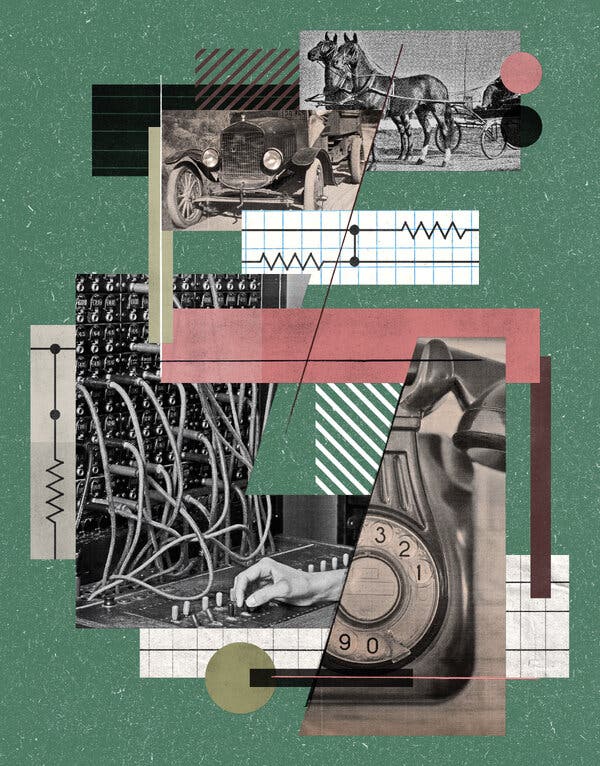
For Clues About How A.I. Will Change Work, Look to the Past
The New York Times suggests examining historical technological shifts to understand how artificial intelligence will reshape the modern workforce.
The story
in brief.
What happened, who it affects, and why it landed on our intelligence desk — in plain English, sixty seconds or less.
The New York Times suggests examining historical technological shifts to understand how artificial intelligence will reshape the modern workforce. Rather than viewing AI as an unprecedented anomaly, the report argues that past industrial and digital transformations offer valuable parallels. By analysing how previous innovations altered job roles and required new competencies, professionals can better anticipate current changes. This historical perspective provides a grounded framework for navigating uncertainty, helping organisations and individuals prepare for structural shifts in labour markets without succumbing to speculative hype or unwarranted alarm.
Indicative index of skill mentions in professional job postings for the field this story moves (2019 = 1)
What this means
for your career.
Every headline redistributes opportunity. Here is who this one rewards — and how to be on the right side of it.
You must view AI not as a replacement for human intellect, but as a tool that amplifies specific capabilities while rendering routine tasks obsolete. Historical precedents show that roles requiring complex problem-solving, emotional intelligence, and strategic oversight consistently rise in value. You should prioritise developing adaptability and critical thinking over rote technical skills. Focus on understanding how to integrate AI into your existing workflow to enhance productivity rather than fearing displacement. Identify tasks in your role that are repetitive and seek AI solutions for them, freeing your time for higher-value strategic work. Engage in continuous learning to stay ahead of curve. Your next step is to audit your current skill set against emerging industry demands, ensuring you possess the unique human qualities that AI cannot easily replicate, such as nuanced leadership and creative innovation.
For this story, the fields that convert it into pay are AI Strategy, Data analytics, Business analysis and Leadership — exactly the programmes matched below. The chart shows the indicative salary uplift certified professionals report in each of those fields; every one of them is a click away, from £79, finishing in as few as 20 days.
Indicative ranges from published continuing-education salary studies, by field — each field is a recommended course below
Enrol in these
to benefit.
These programmes position you for exactly this shift — online, self-paced, and finishing with a verifiable certificate you can share the day you pass.
 Best match
Certificate in AI Strategy
 Recommended
Certificate in Data analytics
 Recommended
Certificate in Business analysis
 Recommended
Certificate in Leadership
Launch pricing shown against standard certificate value. The fee you see today is the fee you lock in.
This briefing is based on reporting by The New York Times on 22 Oct, 09:01. Read the original coverage →
Read the news. Then outrun it.
Every LSBR programme is online, self-paced and from £79 — so a headline today can be your credential this month.
