

Harnessing technology to help farmers assess crop health earlier
Researchers at the University of Pennsylvania have developed a new technological approach to help farmers assess crop health significantly earlier than traditional methods allow.
The story
in brief.
What happened, who it affects, and why it landed on our intelligence desk — in plain English, sixty seconds or less.
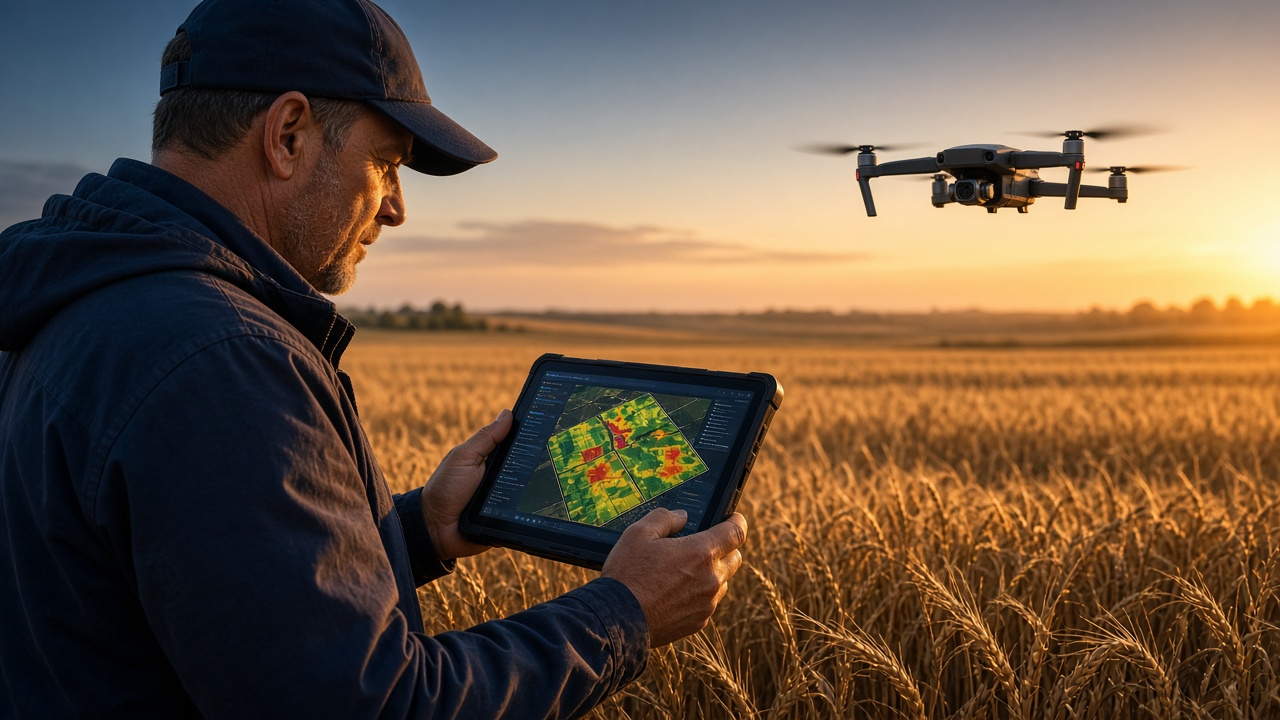
Researchers at the University of Pennsylvania have developed a new technological approach to help farmers assess crop health significantly earlier than traditional methods allow. This innovation leverages advanced data analysis and remote sensing capabilities to detect subtle changes in plant physiology before visible symptoms appear. By identifying stress factors such as disease or nutrient deficiency at an incipient stage, the system aims to reduce crop loss and optimise resource allocation. The research highlights the growing intersection of agricultural science and digital technology, offering a potential pathway for more sustainable and efficient farming practices through early intervention strategies.
Indicative index of skill mentions in professional job postings for the field this story moves (2019 = 1)
What this means
for your career.
Every headline redistributes opportunity. Here is who this one rewards — and how to be on the right side of it.
This development signals a critical shift towards precision agriculture, where data literacy becomes as vital as agronomic knowledge. You should recognise that roles bridging technology and traditional sectors are gaining immense value. Professionals in data science, agritech, and supply chain management must now understand how early detection systems influence downstream logistics and risk mitigation. To stay competitive, you should upskill in interpreting sensor data and applying machine learning models to biological systems. Consider exploring courses that combine technical analytics with domain-specific applications. By mastering these hybrid skills, you position yourself to lead digital transformation initiatives, ensuring your career remains relevant as industries increasingly rely on predictive insights for operational efficiency and strategic decision-making.
For this story, the fields that convert it into pay are AI in Agriculture, Data Science, Supply Chain and Engineering — exactly the programmes matched below. The chart shows the indicative salary uplift certified professionals report in each of those fields; every one of them is a click away, from £79, finishing in as few as 20 days.
Indicative ranges from published continuing-education salary studies, by field — each field is a recommended course below
Enrol in these
to benefit.
These programmes position you for exactly this shift — online, self-paced, and finishing with a verifiable certificate you can share the day you pass.
 Best match
Certificate in AI in Agriculture
 Recommended
Certificate in Data Science
 Recommended
Certificate in Supply Chain
 Recommended
Certificate in Engineering
Launch pricing shown against standard certificate value. The fee you see today is the fee you lock in.
This briefing is based on reporting by Penn Today on 12 Oct, 15:50. Read the original coverage →
Read the news. Then outrun it.
Every LSBR programme is online, self-paced and from £79 — so a headline today can be your credential this month.
