
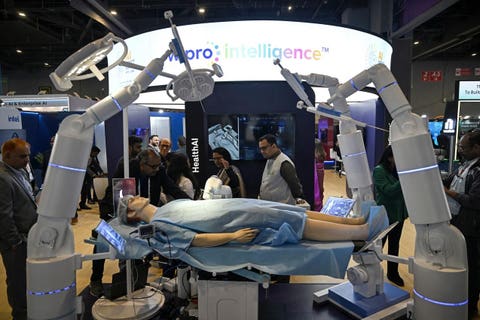
Healthcare AI Got Better This Year. Healthcare Didn’t.
Recent analysis indicates that while artificial intelligence technologies within the healthcare sector have advanced significantly over the past year, overall healthcare outcomes and operational efficiency have not improved correspondingly.
The story
in brief.
What happened, who it affects, and why it landed on our intelligence desk — in plain English, sixty seconds or less.
Recent analysis indicates that while artificial intelligence technologies within the healthcare sector have advanced significantly over the past year, overall healthcare outcomes and operational efficiency have not improved correspondingly. This disconnect suggests that technological capability alone does not guarantee better patient care or system performance. The report highlights a growing gap between AI innovation and its practical, effective integration into clinical workflows, raising questions about implementation strategies, workforce adaptation, and the real-world application of these sophisticated tools in complex medical environments.
Indicative index of skill mentions in professional job postings for the field this story moves (2019 = 1)
What this means
for your career.
Every headline redistributes opportunity. Here is who this one rewards — and how to be on the right side of it.
You must look beyond technical proficiency to understand implementation challenges. As AI capabilities outpace systemic integration, professionals who can bridge this gap become invaluable. Focus on skills that translate technology into tangible clinical or operational improvements. You should prioritise understanding healthcare workflows and change management. Consider upskilling in AI strategy specifically tailored for medical contexts, ensuring you can assess ROI and ethical implications. Leaders who can align technological potential with human-centric care delivery will drive value. Do not merely adopt tools; critically evaluate their fit within existing structures. Your next step is to develop a hybrid skill set combining technical literacy with deep domain expertise in healthcare management, positioning yourself to solve the integration problem rather than just building the technology.
For this story, the fields that convert it into pay are AI in Healthcare, Healthcare Management, AI Strategy and Data Science — exactly the programmes matched below. The chart shows the indicative salary uplift certified professionals report in each of those fields; every one of them is a click away, from £79, finishing in as few as 20 days.
Indicative ranges from published continuing-education salary studies, by field — each field is a recommended course below
Enrol in these
to benefit.
These programmes position you for exactly this shift — online, self-paced, and finishing with a verifiable certificate you can share the day you pass.
 Best match
Certificate in AI in Healthcare
 Recommended
Certificate in Healthcare Management
 Recommended
Certificate in AI Strategy
 Recommended
Certificate in Data Science
Launch pricing shown against standard certificate value. The fee you see today is the fee you lock in.
This briefing is based on reporting by Forbes on 28 Oct, 11:07. Read the original coverage →
Read the news. Then outrun it.
Every LSBR programme is online, self-paced and from £79 — so a headline today can be your credential this month.
