
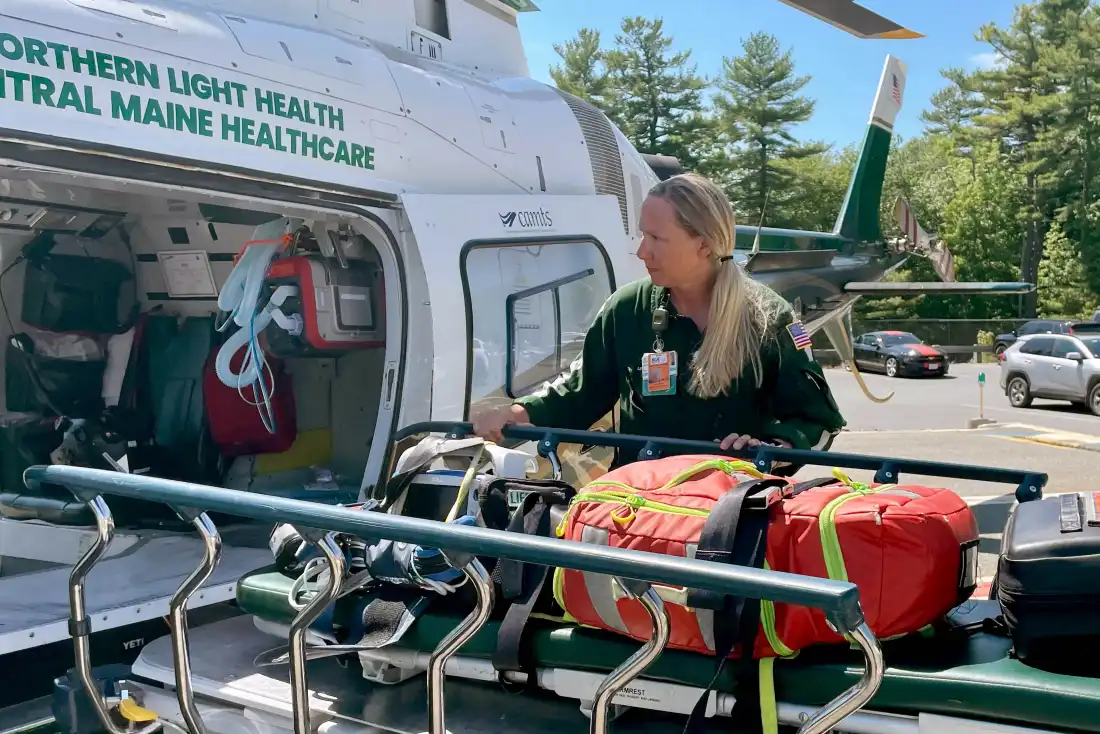
In Maine, a new approach to practicing medicine in the sky
Maine is pioneering a novel framework for delivering medical services via airborne platforms, potentially involving drones or telemedicine integration.
The story
in brief.
What happened, who it affects, and why it landed on our intelligence desk — in plain English, sixty seconds or less.
Maine is pioneering a novel framework for delivering medical services via airborne platforms, potentially involving drones or telemedicine integration. This initiative aims to enhance healthcare accessibility in remote or difficult-to-reach regions by leveraging advanced logistics and communication technologies. The programme represents a significant shift in how medical professionals and support staff operate, bridging geographical gaps through innovative service delivery models. It highlights a growing trend of integrating technology with traditional healthcare to improve patient outcomes and operational efficiency. For professionals, this signals an evolving landscape where technical proficiency and adaptability are increasingly crucial for navigating these emerging, high-stakes operational environments.
Indicative index of skill mentions in professional job postings for the field this story moves (2019 = 1)
What this means
for your career.
Every headline redistributes opportunity. Here is who this one rewards — and how to be on the right side of it.
This development signals a critical shift towards technology-integrated service delivery in remote sectors. Professionals in healthcare logistics, aviation operations, and regulatory compliance must now prioritise skills in digital infrastructure management and cross-functional coordination. You should focus on understanding how autonomous systems interact with clinical workflows. If you work in health services, explore certifications in telemedicine operations or drone logistics. For those in tech, specialising in secure data transmission for medical devices becomes invaluable. Proactively upskill in regulatory frameworks governing aerial medical deliveries. Collaborate with interdisciplinary teams to bridge the gap between clinical needs and technological capabilities. Ignoring this convergence risks professional obsolescence as industries increasingly rely on hybrid, tech-enabled solutions to solve complex accessibility challenges.
For this story, the fields that convert it into pay are Healthcare Management, AI in Aviation, Supply Chain and Risk Management — exactly the programmes matched below. The chart shows the indicative salary uplift certified professionals report in each of those fields; every one of them is a click away, from £79, finishing in as few as 20 days.
Indicative ranges from published continuing-education salary studies, by field — each field is a recommended course below
Enrol in these
to benefit.
These programmes position you for exactly this shift — online, self-paced, and finishing with a verifiable certificate you can share the day you pass.
 Best match
Certificate in Healthcare Management
 Recommended
Certificate in AI in Aviation
 Recommended
Certificate in Supply Chain
 Recommended
Certificate in Risk Management
Launch pricing shown against standard certificate value. The fee you see today is the fee you lock in.
This briefing is based on reporting by NPR on 8 Nov, 11:00. Read the original coverage →
Read the news. Then outrun it.
Every LSBR programme is online, self-paced and from £79 — so a headline today can be your credential this month.
