
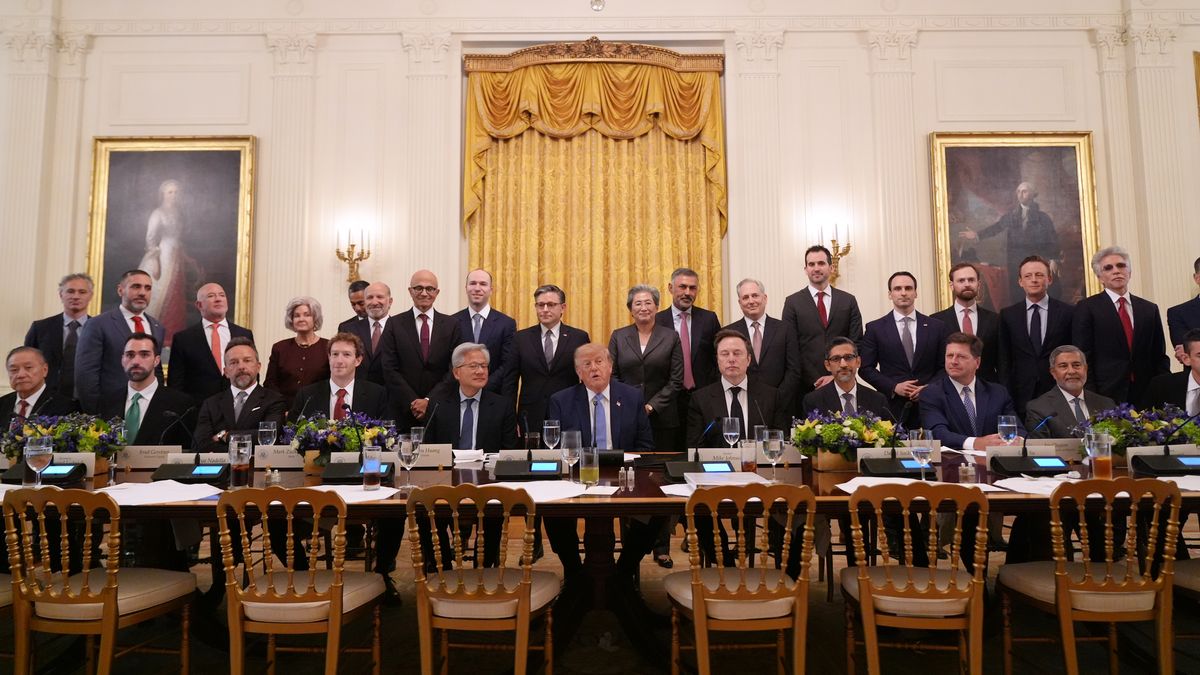
In Silicon Valley, AI founders cheer Trump’s calls for the industry to police itself on safety
Silicon Valley leaders are welcoming former President Donald Trump’s proposal for the artificial intelligence industry to self-regulate safety standards.
The story
in brief.
What happened, who it affects, and why it landed on our intelligence desk — in plain English, sixty seconds or less.
Silicon Valley leaders are welcoming former President Donald Trump’s proposal for the artificial intelligence industry to self-regulate safety standards. This shift away from strict government oversight aligns with the sector’s preference for minimal external interference. The move suggests a future where industry bodies establish their own compliance frameworks rather than adhering to rigid federal mandates. For professionals, this highlights a growing reliance on corporate governance and internal ethical protocols. It underscores the importance of understanding how self-regulation influences product development and risk assessment in tech. The news indicates a potential reduction in immediate legislative pressure, allowing companies greater flexibility in deploying new models while managing public trust through voluntary safety measures.
Indicative index of skill mentions in professional job postings for the field this story moves (2019 = 1)
What this means
for your career.
Every headline redistributes opportunity. Here is who this one rewards — and how to be on the right side of it.
This development signals a pivot towards corporate-led governance in AI. You must now prioritise skills in ethical AI deployment and internal compliance, as external regulations may lag. Professionals in leadership and risk management should focus on building robust internal safety frameworks. If you work in tech strategy, understand how self-regulation affects product timelines and liability. Smart professionals will upskill in AI governance and ethical decision-making, positioning themselves as experts in navigating this unregulated landscape. Develop expertise in creating transparent safety protocols that satisfy both investors and the public. By mastering these areas, you become indispensable in an environment where companies must proactively manage reputational and operational risks without heavy government oversight.
For this story, the fields that convert it into pay are AI Strategy, Risk Management, Leadership and Artificial Intelligence — exactly the programmes matched below. The chart shows the indicative salary uplift certified professionals report in each of those fields; every one of them is a click away, from £79, finishing in as few as 20 days.
Indicative ranges from published continuing-education salary studies, by field — each field is a recommended course below
Enrol in these
to benefit.
These programmes position you for exactly this shift — online, self-paced, and finishing with a verifiable certificate you can share the day you pass.
 Best match
Certificate in AI Strategy
 Recommended
Certificate in Risk Management
 Recommended
Certificate in Leadership
 Recommended
Certificate in Artificial Intelligence
Launch pricing shown against standard certificate value. The fee you see today is the fee you lock in.
This briefing is based on reporting by WRAL on 11 Oct, 03:13. Read the original coverage →
Read the news. Then outrun it.
Every LSBR programme is online, self-paced and from £79 — so a headline today can be your credential this month.
