
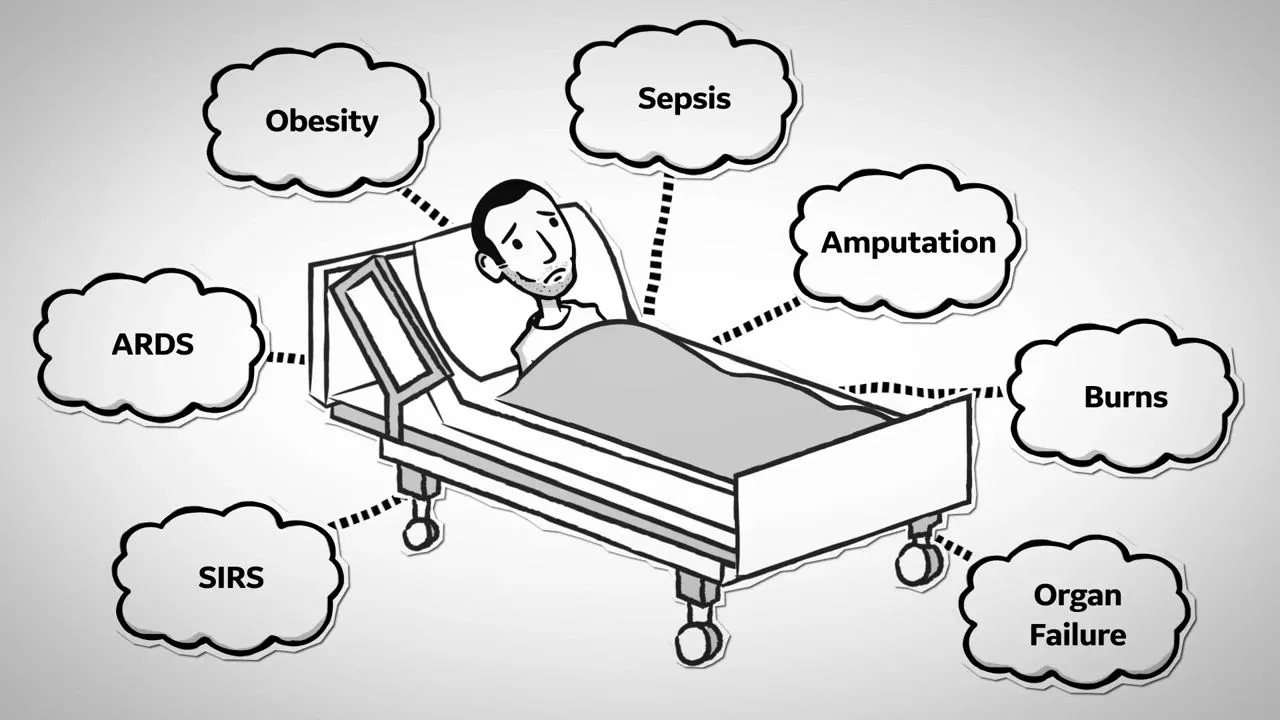
Indirect Calorimetry – Feeding Critically Ill Patients
GE HealthCare highlights the clinical application of indirect calorimetry in managing nutrition for critically ill patients.
The story
in brief.
What happened, who it affects, and why it landed on our intelligence desk — in plain English, sixty seconds or less.
GE HealthCare highlights the clinical application of indirect calorimetry in managing nutrition for critically ill patients. This technology measures energy expenditure directly, allowing clinicians to tailor nutritional support precisely rather than relying on estimation formulas. The report underscores a shift towards personalised, data-driven metabolic care in intensive care units. By accurately determining caloric needs, healthcare providers can optimise patient outcomes and reduce the risks associated with over- or under-feeding. This development signals a growing integration of advanced diagnostic tools into standard critical care protocols, emphasising precision medicine approaches for vulnerable populations requiring intensive nutritional management.
Indicative index of skill mentions in professional job postings for the field this story moves (2019 = 1)
What this means
for your career.
Every headline redistributes opportunity. Here is who this one rewards — and how to be on the right side of it.
You must adapt to the increasing demand for precision nutrition expertise in critical care. As indirect calorimetry becomes standard, clinicians who understand metabolic monitoring will hold significant competitive advantage. Nurses, dietitians, and intensivists should prioritise training in interpreting calorimetry data to personalise care plans effectively. This shift elevates the value of skills in metabolic assessment and evidence-based nutritional therapy. You should seek certifications or advanced modules in clinical nutrition technology to future-proof your career. Pay close attention to interdisciplinary collaboration, as integrating this data requires seamless communication between respiratory therapy and dietetics. Proactively engage with hospital procurement and clinical teams to understand implementation challenges. By mastering these tools, you position yourself as a leader in delivering high-quality, individualised critical care, directly impacting patient recovery rates and operational efficiency.
For this story, the fields that convert it into pay are Healthcare Management, Health and Social Care, Clinical Nutrition and Critical Care — exactly the programmes matched below. The chart shows the indicative salary uplift certified professionals report in each of those fields; every one of them is a click away, from £79, finishing in as few as 20 days.
Indicative ranges from published continuing-education salary studies, by field — each field is a recommended course below
Enrol in these
to benefit.
These programmes position you for exactly this shift — online, self-paced, and finishing with a verifiable certificate you can share the day you pass.
 Best match
Certificate in Healthcare Management
 Recommended
Certificate in Health and Social Care
 Recommended
Certificate in Clinical Nutrition
 Recommended
Certificate in Critical Care
Launch pricing shown against standard certificate value. The fee you see today is the fee you lock in.
This briefing is based on reporting by GE HealthCare on 13 Oct, 18:32. Read the original coverage →
Read the news. Then outrun it.
Every LSBR programme is online, self-paced and from £79 — so a headline today can be your credential this month.
