
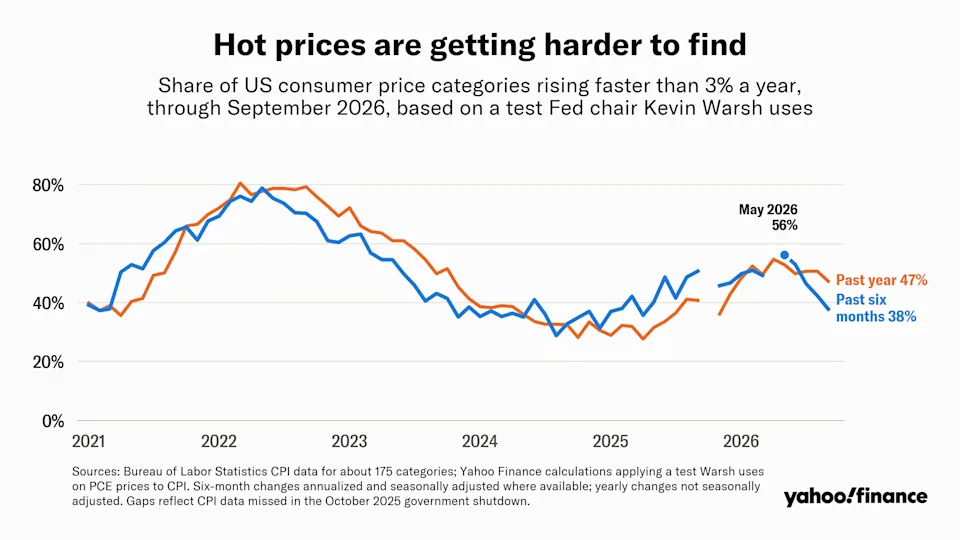
Inflation is retreating from most of the store — why your biggest bills are the holdouts: Chart of the Day
Recent economic data indicates that overall inflation rates are declining across most consumer categories, suggesting a broad stabilisation of price levels.
The story
in brief.
What happened, who it affects, and why it landed on our intelligence desk — in plain English, sixty seconds or less.
Recent economic data indicates that overall inflation rates are declining across most consumer categories, suggesting a broad stabilisation of price levels. However, significant exceptions persist in key areas such as housing, healthcare, and insurance, which remain stubbornly high. This divergence means that while general cost-of-living pressures may ease for some goods, major fixed expenses continue to strain household budgets. The report highlights this structural split, noting that the retreat of inflation is uneven. Professionals must recognise that the economic recovery is not uniform, with essential services and assets defying the broader downward trend in price increases.
Indicative index of skill mentions in professional job postings for the field this story moves (2019 = 1)
What this means
for your career.
Every headline redistributes opportunity. Here is who this one rewards — and how to be on the right side of it.
This divergence demands a sharper financial acumen. You must adapt your career strategy to navigate a mixed economic landscape where general prices fall but essential costs rise. Professionals in Finance and Accounting will see heightened demand for sophisticated personal and corporate budgeting skills that account for these specific inflationary holdouts. If you work in Human Resources, you must anticipate pressure on compensation structures, as employees struggle with housing and health costs despite broader economic cooling. Smart professionals will upskill in data analysis to interpret nuanced economic indicators rather than relying on headline figures. You should also consider roles focused on cost optimisation in sectors like healthcare or real estate. Prioritise developing expertise in strategic financial planning to advise stakeholders on managing these persistent cost pressures effectively.
For this story, the fields that convert it into pay are Finance and Accounting, Human Resources, Business and Management and Risk Management — exactly the programmes matched below. The chart shows the indicative salary uplift certified professionals report in each of those fields; every one of them is a click away, from £79, finishing in as few as 20 days.
Indicative ranges from published continuing-education salary studies, by field — each field is a recommended course below
Enrol in these
to benefit.
These programmes position you for exactly this shift — online, self-paced, and finishing with a verifiable certificate you can share the day you pass.
 Best match
Certificate in Finance and Accounting
 Recommended
Certificate in Human Resources
 Recommended
Certificate in Business and Management
Recommended
Certificate in Risk Management
Launch pricing shown against standard certificate value. The fee you see today is the fee you lock in.
This briefing is based on reporting by Yahoo Finance on 18 Oct, 11:33. Read the original coverage →
Read the news. Then outrun it.
Every LSBR programme is online, self-paced and from £79 — so a headline today can be your credential this month.
