
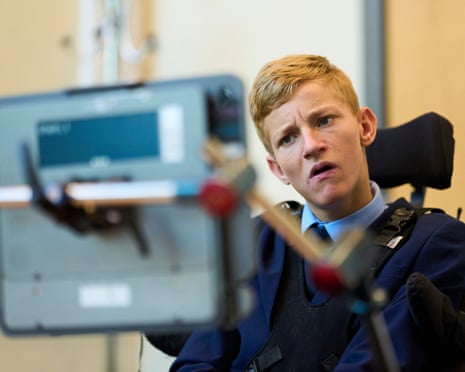
‘Just like my big brothers’: boy with cerebral palsy passes GCSEs with eye-tracking technology
A young student with cerebral palsy has successfully completed his GCSE examinations using eye-tracking technology.
The story
in brief.
What happened, who it affects, and why it landed on our intelligence desk — in plain English, sixty seconds or less.
A young student with cerebral palsy has successfully completed his GCSE examinations using eye-tracking technology. This achievement reported by The Guardian. The case highlights how assistive technologies enable individuals with significant physical disabilities to access standard educational assessments. By controlling a computer cursor through eye movements, the student demonstrated that inclusive technological solutions can remove barriers to academic progression. This development underscores the growing role of adaptive hardware in ensuring equitable access to education for students with complex needs, marking a significant step towards normalisation of assistive tech in mainstream schooling environments across the United Kingdom.
Indicative index of skill mentions in professional job postings for the field this story moves (2019 = 1)
What this means
for your career.
Every headline redistributes opportunity. Here is who this one rewards — and how to be on the right side of it.
You must recognise that inclusive technology is no longer niche; it is essential for talent acquisition and retention. Skills in accessibility compliance and assistive tech integration are rising in value across HR, IT, and operations. Professionals in Health and Social Care or Education should pay close attention to how such tools reshape service delivery and student outcomes. A smart professional would immediately audit their organisation’s digital infrastructure for accessibility gaps. You should also explore training in disability inclusion strategies to ensure your team leverages diverse talent pools effectively. Ignoring these developments risks legal non-compliance and missed innovation opportunities. Proactively adopting inclusive design principles now positions you as a forward-thinking leader who values equity, ultimately enhancing your organisation’s reputation and operational resilience in an increasingly diverse workforce.
For this story, the fields that convert it into pay are Health and Social Care, Education, Human Resources and Occupational Health and Safety — exactly the programmes matched below. The chart shows the indicative salary uplift certified professionals report in each of those fields; every one of them is a click away, from £79, finishing in as few as 20 days.
Indicative ranges from published continuing-education salary studies, by field — each field is a recommended course below
Enrol in these
to benefit.
These programmes position you for exactly this shift — online, self-paced, and finishing with a verifiable certificate you can share the day you pass.
 Best match
Certificate in Health and Social Care
 Recommended
Certificate in Education
 Recommended
Certificate in Human Resources
 Recommended
Certificate in Occupational Health and Safety
Launch pricing shown against standard certificate value. The fee you see today is the fee you lock in.
This briefing is based on reporting by The Guardian on 2 Oct, 17:44. Read the original coverage →
Read the news. Then outrun it.
Every LSBR programme is online, self-paced and from £79 — so a headline today can be your credential this month.
