
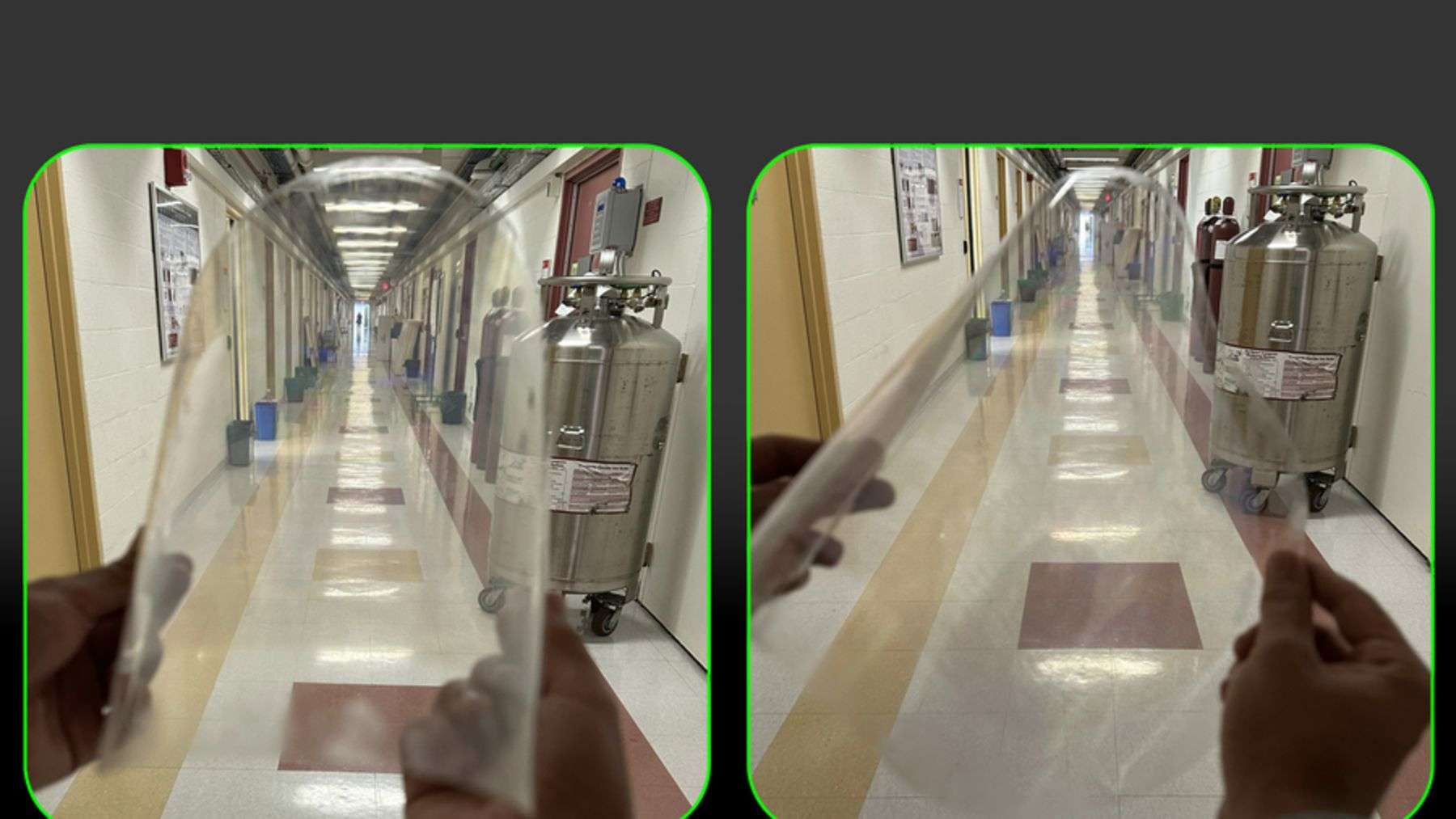
MIT’s transparent light-guiding circuits kept working after repeated bending, opening possibilities for flexible electronics
Researchers at MIT have developed transparent light-guiding circuits that maintain functionality after repeated bending.
The story
in brief.
What happened, who it affects, and why it landed on our intelligence desk — in plain English, sixty seconds or less.
Researchers at MIT have developed transparent light-guiding circuits that maintain functionality after repeated bending. This advancement addresses a key durability challenge in flexible electronics, where traditional materials often degrade under mechanical stress. The technology enables the creation of bendable, see-through electronic components that remain operational despite physical deformation. For professionals in technology and manufacturing, this signals a tangible step towards more robust flexible devices. The development suggests future applications in wearable technology, foldable displays, and integrated optical systems. It highlights the growing intersection of materials science and photonics, offering new opportunities for innovation in hardware design and electronic engineering sectors.
Indicative index of skill mentions in professional job postings for the field this story moves (2019 = 1)
What this means
for your career.
Every headline redistributes opportunity. Here is who this one rewards — and how to be on the right side of it.
You should monitor this development closely if you work in hardware engineering, materials science, or product innovation. As flexible electronics mature, demand will rise for specialists who understand both optical physics and mechanical durability. Traditional software skills are less relevant here; instead, expertise in photonic circuit design and advanced material properties becomes critical. You should consider upskilling in engineering disciplines that bridge optics and structural integrity. Professionals in R&D should evaluate how this technology could disrupt current product lifecycles. If you lead a technical team, prepare for shifting resource allocations towards flexible device prototyping. Staying informed about these material breakthroughs ensures you remain competitive in a rapidly evolving hardware landscape, where durability and transparency are becoming key differentiators for next-generation consumer and industrial electronics.
For this story, the fields that convert it into pay are Engineering, AI in Engineering, Innovation and Data Science — exactly the programmes matched below. The chart shows the indicative salary uplift certified professionals report in each of those fields; every one of them is a click away, from £79, finishing in as few as 20 days.
Indicative ranges from published continuing-education salary studies, by field — each field is a recommended course below
Enrol in these
to benefit.
These programmes position you for exactly this shift — online, self-paced, and finishing with a verifiable certificate you can share the day you pass.
 Best match
Certificate in Engineering
 Recommended
Certificate in AI in Engineering
 Recommended
Certificate in Innovation
 Recommended
Certificate in Data Science
Launch pricing shown against standard certificate value. The fee you see today is the fee you lock in.
This briefing is based on reporting by EcoPortal.net on 7 Nov, 20:55. Read the original coverage →
Read the news. Then outrun it.
Every LSBR programme is online, self-paced and from £79 — so a headline today can be your credential this month.
