
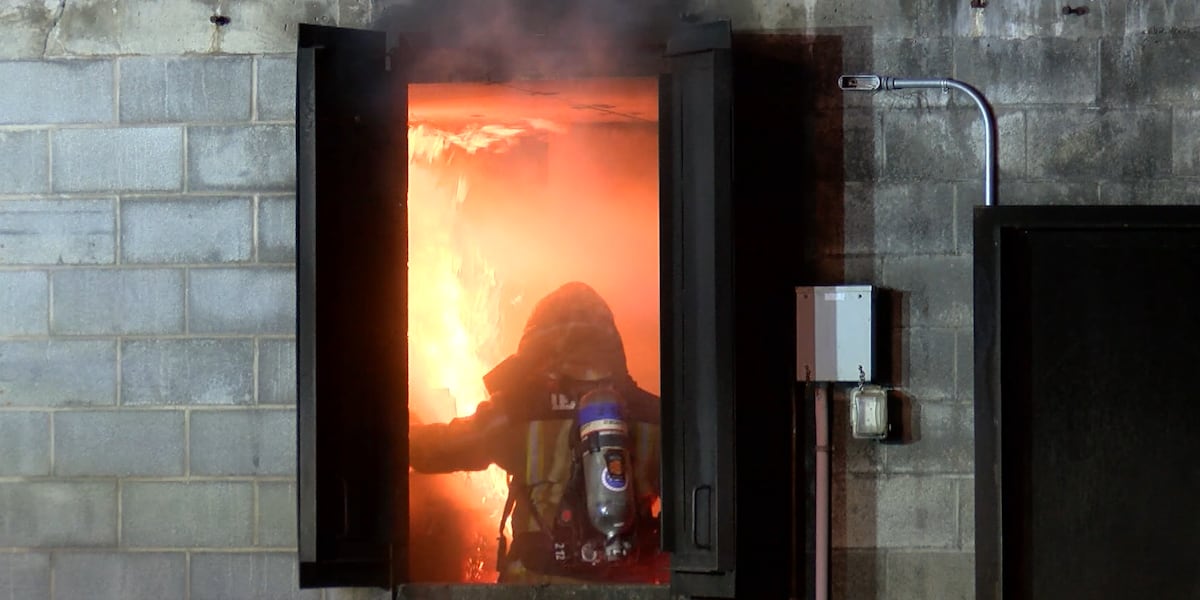
New fire suppression technology demonstrated in Vestal
A new fire suppression technology was recently demonstrated in Vestal, as reported by WBNG.
The story
in brief.
What happened, who it affects, and why it landed on our intelligence desk — in plain English, sixty seconds or less.
A new fire suppression technology was recently demonstrated in Vestal, as reported by WBNG. This event highlights ongoing advancements in industrial safety systems, showcasing innovative methods for extinguishing fires more effectively. The demonstration serves as a practical case study for emerging engineering solutions in hazard mitigation. For professionals in safety and engineering sectors, this represents a tangible update in operational capabilities. The report remains factual, focusing on the technical demonstration rather than speculative outcomes. It signals a shift towards more efficient, potentially automated or chemically advanced suppression mechanisms. Understanding these developments is crucial for maintaining compliance with evolving safety standards. The story underscores the continuous evolution of risk management tools in industrial environments, offering insights into next-generation safety protocols.
Indicative index of skill mentions in professional job postings for the field this story moves (2019 = 1)
What this means
for your career.
Every headline redistributes opportunity. Here is who this one rewards — and how to be on the right side of it.
This development directly elevates the value of expertise in modern hazard mitigation and safety engineering. You must now understand emerging suppression technologies to maintain compliance and protect assets. Professionals in engineering, facility management, and risk assessment should pay close attention. Your next step is to update your knowledge on advanced safety systems. Consider upskilling in Occupational Health and Safety to stay relevant. Familiarise yourself with new engineering standards related to fire prevention. This positions you as a forward-thinking expert capable of implementing cutting-edge solutions. Do not ignore these shifts; they redefine industry benchmarks. Proactively seek training in risk management to leverage this trend. Your career resilience depends on adapting to such technological advancements swiftly and practically.
For this story, the fields that convert it into pay are Occupational Health and Safety, Engineering, Risk Management and Project Management — exactly the programmes matched below. The chart shows the indicative salary uplift certified professionals report in each of those fields; every one of them is a click away, from £79, finishing in as few as 20 days.
Indicative ranges from published continuing-education salary studies, by field — each field is a recommended course below
Enrol in these
to benefit.
These programmes position you for exactly this shift — online, self-paced, and finishing with a verifiable certificate you can share the day you pass.
 Best match
Certificate in Occupational Health and Safety
 Recommended
Certificate in Engineering
 Recommended
Certificate in Risk Management
Recommended
Certificate in Project Management
Launch pricing shown against standard certificate value. The fee you see today is the fee you lock in.
This briefing is based on reporting by WBNG on 8 Oct, 03:10. Read the original coverage →
Read the news. Then outrun it.
Every LSBR programme is online, self-paced and from £79 — so a headline today can be your credential this month.
