
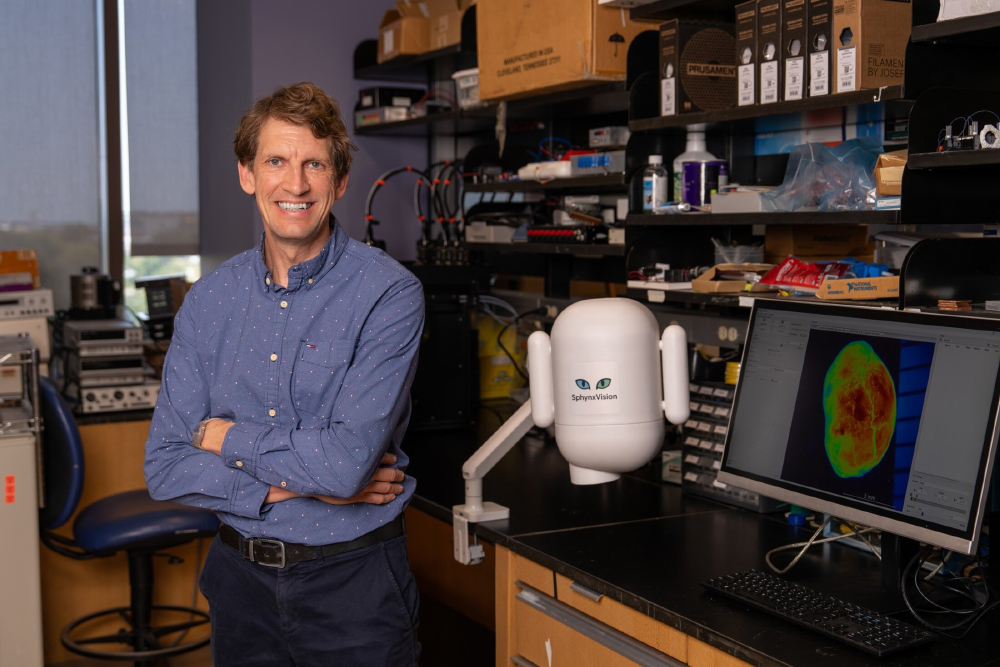
New technology lets cancer researchers watch experiments unfold in real time
A recent report highlights breakthrough technology enabling cancer researchers to observe experimental processes in real time.
The story
in brief.
What happened, who it affects, and why it landed on our intelligence desk — in plain English, sixty seconds or less.
A recent report highlights breakthrough technology enabling cancer researchers to observe experimental processes in real time. This advancement moves beyond static data points, offering dynamic visualisation of biological interactions as they occur. The innovation promises to accelerate drug discovery and deepen understanding of tumour behaviour. For professionals in life sciences and adjacent sectors, this represents a significant shift in how experimental data is captured and interpreted. The technology facilitates immediate feedback loops, potentially reducing trial durations and improving precision in therapeutic development. It underscores the growing intersection of advanced imaging, computational biology, and oncology research.
Indicative index of skill mentions in professional job postings for the field this story moves (2019 = 1)
What this means
for your career.
Every headline redistributes opportunity. Here is who this one rewards — and how to be on the right side of it.
You must adapt to a landscape where real-time data fluency is paramount. Roles bridging biology, data science, and technology will see heightened demand. You should prioritise skills in data analytics and visualisation to interpret these dynamic streams effectively. Professionals in healthcare management must understand how this technology influences R&D timelines and resource allocation. If you work in biotech or pharma, upskilling in AI applications for healthcare is essential. You should network with researchers adopting these tools to understand practical implementation challenges. Smart professionals will now focus on integrating computational models with wet-lab experiments. This shift rewards those who can translate complex, real-time biological data into actionable strategic insights, making interdisciplinary expertise your most valuable asset.
For this story, the fields that convert it into pay are AI in Healthcare, Data analytics, Healthcare Management and AI in Pharmaceuticals — exactly the programmes matched below. The chart shows the indicative salary uplift certified professionals report in each of those fields; every one of them is a click away, from £79, finishing in as few as 20 days.
Indicative ranges from published continuing-education salary studies, by field — each field is a recommended course below
Enrol in these
to benefit.
These programmes position you for exactly this shift — online, self-paced, and finishing with a verifiable certificate you can share the day you pass.
 Best match
Certificate in AI in Healthcare
 Recommended
Certificate in Data analytics
 Recommended
Certificate in Healthcare Management
 Recommended
Certificate in AI in Pharmaceuticals
Launch pricing shown against standard certificate value. The fee you see today is the fee you lock in.
This briefing is based on reporting by The Cancer Letter on 9 Oct, 19:29. Read the original coverage →
Read the news. Then outrun it.
Every LSBR programme is online, self-paced and from £79 — so a headline today can be your credential this month.
