
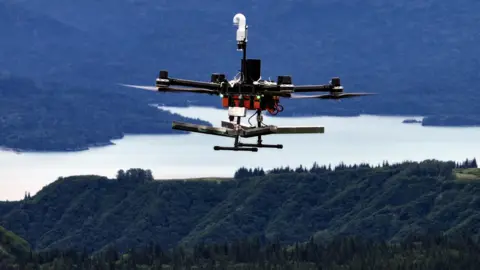
Rainmakers: Will drones make cloud seeding more effective?
Recent reporting explores whether drone technology can enhance the precision and efficacy of cloud seeding operations.
The story
in brief.
What happened, who it affects, and why it landed on our intelligence desk — in plain English, sixty seconds or less.
Recent reporting explores whether drone technology can enhance the precision and efficacy of cloud seeding operations. Traditionally reliant on aircraft or ground-based generators, this weather modification technique is being re-evaluated through the lens of unmanned aerial systems. The discussion highlights potential improvements in data collection, targeted dispersal, and operational cost-efficiency. For professionals in atmospheric sciences and environmental management, this shift signals a move towards more granular, technology-driven interventions. The narrative underscores the intersection of aerospace engineering and meteorological science, suggesting that future climate adaptation strategies may increasingly depend on agile, automated delivery systems rather than conventional methods.
Indicative index of skill mentions in professional job postings for the field this story moves (2019 = 1)
What this means
for your career.
Every headline redistributes opportunity. Here is who this one rewards — and how to be on the right side of it.
You should monitor the convergence of aerospace engineering and environmental management. As drones become central to weather modification, demand rises for specialists in unmanned aerial systems, atmospheric data analysis, and regulatory compliance. Professionals in engineering and environmental sectors must upskill in remote sensing and autonomous navigation. If you work in risk management or public administration, understand the legal and ethical frameworks governing weather intervention. Smart professionals will pursue certifications in drone operations and data analytics to remain competitive. Prioritise courses that bridge technical aviation skills with environmental science, ensuring you can interpret complex meteorological data. This niche is expanding; early adoption of these hybrid skills positions you for leadership roles in emerging climate-tech initiatives.
For this story, the fields that convert it into pay are Engineering, Data analytics, Risk Management and Public Administration — exactly the programmes matched below. The chart shows the indicative salary uplift certified professionals report in each of those fields; every one of them is a click away, from £79, finishing in as few as 20 days.
Indicative ranges from published continuing-education salary studies, by field — each field is a recommended course below
Enrol in these
to benefit.
These programmes position you for exactly this shift — online, self-paced, and finishing with a verifiable certificate you can share the day you pass.
 Best match
Certificate in Engineering
 Recommended
Certificate in Data analytics
Recommended
Certificate in Risk Management
 Recommended
Certificate in Public Administration
Launch pricing shown against standard certificate value. The fee you see today is the fee you lock in.
This briefing is based on reporting by BBC on 7 Oct, 07:09. Read the original coverage →
Read the news. Then outrun it.
Every LSBR programme is online, self-paced and from £79 — so a headline today can be your credential this month.
