
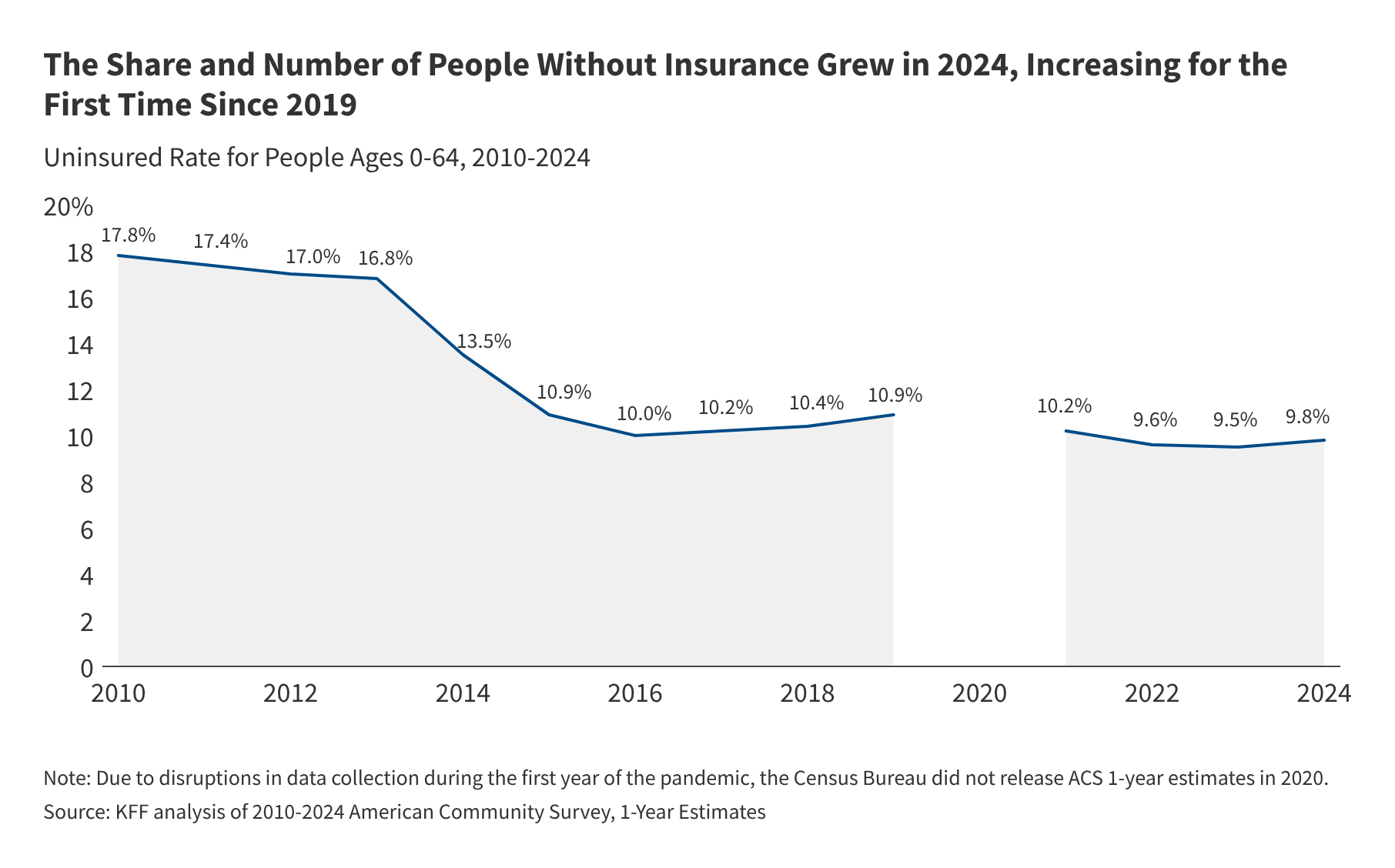
Reasons for Being Uninsured - Key Facts about the Uninsured Population
Recent analysis from the Kaiser Family Foundation outlines critical statistics regarding the uninsured population in the United States.
The story
in brief.
What happened, who it affects, and why it landed on our intelligence desk — in plain English, sixty seconds or less.
Recent analysis from the Kaiser Family Foundation outlines critical statistics regarding the uninsured population in the United States. The report details primary reasons individuals lack coverage, including affordability, eligibility confusion, and administrative barriers. It provides a factual breakdown of demographic trends and insurance status changes. For professionals, this data highlights persistent gaps in the healthcare system. Understanding these structural issues is essential for those operating within health policy, insurance, or corporate benefits sectors. The findings offer a neutral, evidence-based overview of current coverage challenges, serving as a vital reference for strategic planning and policy evaluation in an evolving regulatory landscape.
Indicative index of skill mentions in professional job postings for the field this story moves (2019 = 1)
What this means
for your career.
Every headline redistributes opportunity. Here is who this one rewards — and how to be on the right side of it.
This data signals growing demand for expertise in health policy and benefits administration. You should prioritise skills in Healthcare Management and Risk Management to navigate complex coverage landscapes. Professionals in Human Resources must understand these trends to design effective employee benefits packages that mitigate uninsured risks. Consider upskilling in data analysis to interpret such reports for strategic decision-making. A smart move is to specialise in health economics or insurance regulation. This knowledge allows you to advise clients or employers on cost-effective coverage solutions. Stay ahead by monitoring policy shifts affecting the uninsured. Your ability to translate these statistics into actionable business strategies will differentiate you in a competitive job market. Focus on roles that bridge healthcare delivery with administrative efficiency.
For this story, the fields that convert it into pay are Healthcare Management, Risk Management, Human Resources and Health and Social Care — exactly the programmes matched below. The chart shows the indicative salary uplift certified professionals report in each of those fields; every one of them is a click away, from £79, finishing in as few as 20 days.
Indicative ranges from published continuing-education salary studies, by field — each field is a recommended course below
Enrol in these
to benefit.
These programmes position you for exactly this shift — online, self-paced, and finishing with a verifiable certificate you can share the day you pass.
 Best match
Certificate in Healthcare Management
 Recommended
Certificate in Risk Management
Recommended
Certificate in Human Resources
 Recommended
Certificate in Health and Social Care
Launch pricing shown against standard certificate value. The fee you see today is the fee you lock in.
This briefing is based on reporting by KFF on 16 Jun, 07:00. Read the original coverage →
Read the news. Then outrun it.
Every LSBR programme is online, self-paced and from £79 — so a headline today can be your credential this month.
