
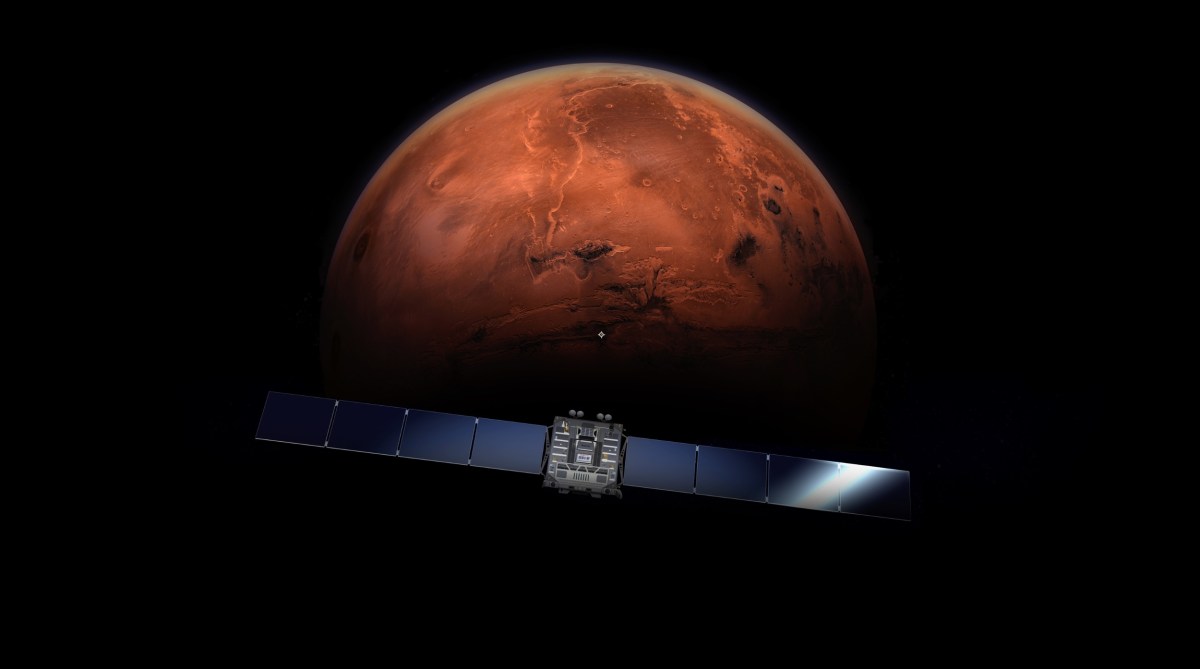
Relativity Space Mars orbiter mission to feature advanced computing and communications technologies
Relativity Space has announced that its upcoming Mars orbiter mission will incorporate advanced computing and communications technologies.
The story
in brief.
What happened, who it affects, and why it landed on our intelligence desk — in plain English, sixty seconds or less.
Relativity Space has announced that its upcoming Mars orbiter mission will incorporate advanced computing and communications technologies. This development highlights the integration of high-performance data processing and robust signal transmission systems into deep space exploration hardware. The initiative underscores the critical role of next-generation digital infrastructure in supporting complex aerospace operations beyond Earth orbit. For industry observers, this signals a continued push towards more autonomous and data-rich space missions, requiring sophisticated technical solutions to manage latency and information density in extreme environments.
Indicative index of skill mentions in professional job postings for the field this story moves (2019 = 1)
What this means
for your career.
Every headline redistributes opportunity. Here is who this one rewards — and how to be on the right side of it.
This development elevates the value of specialists in aerospace data systems and satellite communications. If you work in engineering or IT, focus on mastering low-latency network protocols and edge computing architectures suited for extreme environments. Professionals in project management should study complex, high-risk technical delivery frameworks. Smart practitioners will upskill in digital twin technology and real-time data analytics to bridge the gap between raw telemetry and actionable insights. Consider obtaining certifications in cloud-native aerospace applications or advanced signal processing. Engage with industry groups focusing on deep space infrastructure to understand emerging standards. Diversify your portfolio to include projects involving autonomous system reliability, as these skills become increasingly transferable across defence and commercial space sectors.
For this story, the fields that convert it into pay are Engineering, AI in Engineering, Cloud computing and Data analytics — exactly the programmes matched below. The chart shows the indicative salary uplift certified professionals report in each of those fields; every one of them is a click away, from £79, finishing in as few as 20 days.
Indicative ranges from published continuing-education salary studies, by field — each field is a recommended course below
Enrol in these
to benefit.
These programmes position you for exactly this shift — online, self-paced, and finishing with a verifiable certificate you can share the day you pass.
 Best match
Certificate in Engineering
 Recommended
Certificate in AI in Engineering
 Recommended
Certificate in Cloud computing
 Recommended
Certificate in Data analytics
Launch pricing shown against standard certificate value. The fee you see today is the fee you lock in.
This briefing is based on reporting by SpaceNews on 12 Nov, 22:17. Read the original coverage →
Read the news. Then outrun it.
Every LSBR programme is online, self-paced and from £79 — so a headline today can be your credential this month.
