
Routing the way to sharper and brighter low light photography with tiny 3D printed colour routers
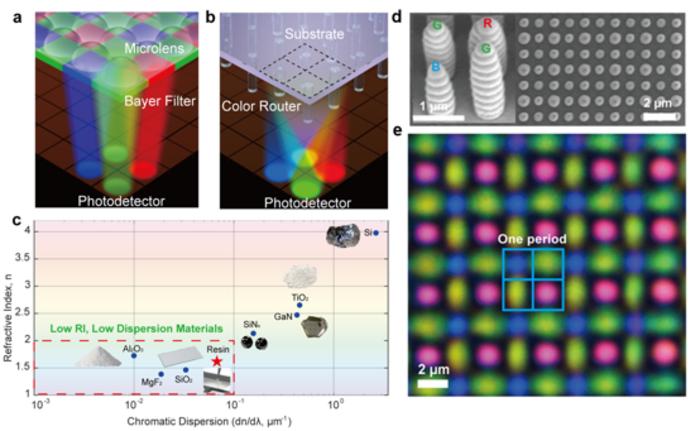
Researchers have developed microscopic, three-dimensional printed colour routers that significantly enhance low-light photography performance.
The story
in brief.
What happened, who it affects, and why it landed on our intelligence desk — in plain English, sixty seconds or less.
Researchers have developed microscopic, three-dimensional printed colour routers that significantly enhance low-light photography performance. By precisely directing light at the pixel level, these tiny devices improve image clarity and brightness in dim conditions without requiring larger sensors or lenses. This innovation addresses a fundamental limitation in compact imaging systems, offering a hardware-based solution for better light capture. The technology could revolutionise consumer electronics, medical imaging, and surveillance equipment by enabling sharper, brighter images in challenging lighting environments while maintaining small form factors. It represents a convergence of additive manufacturing and optical engineering, demonstrating how micro-scale fabrication can solve macro-level imaging challenges efficiently.
Indicative index of skill mentions in professional job postings for the field this story moves (2019 = 1)
What this means
for your career.
Every headline redistributes opportunity. Here is who this one rewards — and how to be on the right side of it.
You should monitor this development if you work in hardware innovation, optical engineering, or advanced manufacturing. Professionals in R&D and product design must now understand how micro-optics integrate with 3D printing workflows. Skills in precision manufacturing and optical physics will rise in value as industries adopt these components. You should explore cross-disciplinary training that bridges material science and digital fabrication. Engage with emerging additive manufacturing techniques to stay relevant. Consider how this technology impacts your sector’s imaging requirements, whether in healthcare diagnostics or consumer tech. Proactively learn about micro-scale design constraints to lead future product cycles. This shift demands a mindset that values miniaturisation and material innovation equally.
For this story, the fields that convert it into pay are Engineering, Innovation, AI in Manufacturing and Project Management — exactly the programmes matched below. The chart shows the indicative salary uplift certified professionals report in each of those fields; every one of them is a click away, from £79, finishing in as few as 20 days.
Indicative ranges from published continuing-education salary studies, by field — each field is a recommended course below
Enrol in these
to benefit.
These programmes position you for exactly this shift — online, self-paced, and finishing with a verifiable certificate you can share the day you pass.
 Best match
Certificate in Engineering
 Recommended
Certificate in Innovation
 Recommended
Certificate in AI in Manufacturing
 Recommended
Certificate in Project Management
Launch pricing shown against standard certificate value. The fee you see today is the fee you lock in.
This briefing is based on reporting by EurekAlert! on 22 Oct, 21:12. Read the original coverage →
Read the news. Then outrun it.
Every LSBR programme is online, self-paced and from £79 — so a headline today can be your credential this month.
