
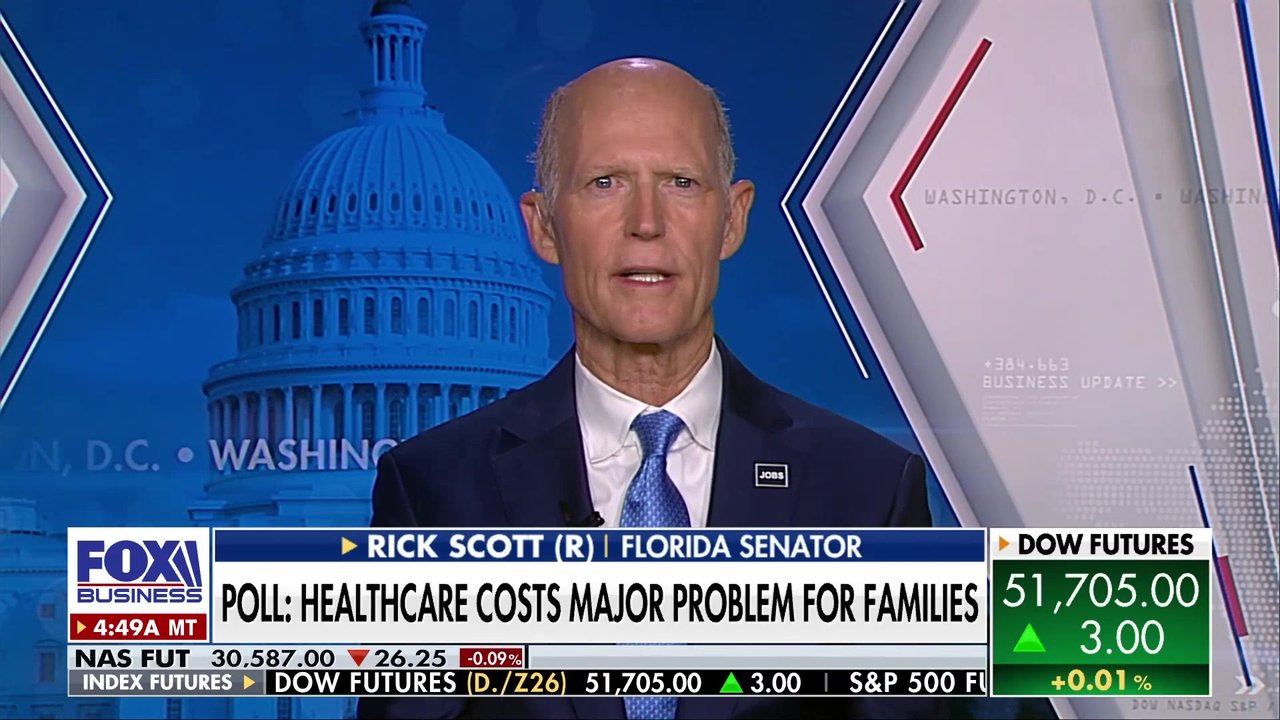
Sen Rick Scott proposes private sector solutions to lower healthcare prices
Senator Rick Scott has introduced a proposal advocating for private sector mechanisms to reduce healthcare costs.
The story
in brief.
What happened, who it affects, and why it landed on our intelligence desk — in plain English, sixty seconds or less.
Senator Rick Scott has introduced a proposal advocating for private sector mechanisms to reduce healthcare costs. The plan suggests leveraging market competition and private industry solutions rather than expanding federal involvement or price controls. This legislative move signals a potential shift in policy debate towards deregulation and market-driven efficiency within the US healthcare system. For professionals, this highlights the ongoing tension between public administration and private enterprise in managing complex social services. The report indicates that future regulatory frameworks may increasingly favour private innovation and competitive pricing structures over traditional government-led cost containment strategies.
Indicative index of skill mentions in professional job postings for the field this story moves (2019 = 1)
What this means
for your career.
Every headline redistributes opportunity. Here is who this one rewards — and how to be on the right side of it.
You must anticipate a regulatory environment that increasingly rewards private sector efficiency over traditional bureaucratic processes. If this policy gains traction, expertise in navigating private healthcare markets will become highly valuable. You should focus on understanding how market forces can be applied to service delivery. Professionals in healthcare administration, consulting, and policy analysis should pay close attention. A smart move is to upskill in healthcare management and risk assessment. You need to understand how private entities can optimise costs while maintaining quality. This shift favours those who can bridge the gap between clinical operations and business strategy. Prepare to advise clients or employers on adapting to potential deregulation. Your ability to identify profitable, efficient care models will distinguish you from peers who only understand traditional public sector frameworks.
For this story, the fields that convert it into pay are Healthcare Management, Risk Management, Business and Management and Public Administration — exactly the programmes matched below. The chart shows the indicative salary uplift certified professionals report in each of those fields; every one of them is a click away, from £79, finishing in as few as 20 days.
Indicative ranges from published continuing-education salary studies, by field — each field is a recommended course below
Enrol in these
to benefit.
These programmes position you for exactly this shift — online, self-paced, and finishing with a verifiable certificate you can share the day you pass.
 Best match
Certificate in Healthcare Management
 Recommended
Certificate in Risk Management
 Recommended
Certificate in Business and Management
 Recommended
Certificate in Public Administration
Launch pricing shown against standard certificate value. The fee you see today is the fee you lock in.
This briefing is based on reporting by Fox Business on 30 Sep, 11:21. Read the original coverage →
Read the news. Then outrun it.
Every LSBR programme is online, self-paced and from £79 — so a headline today can be your credential this month.
