
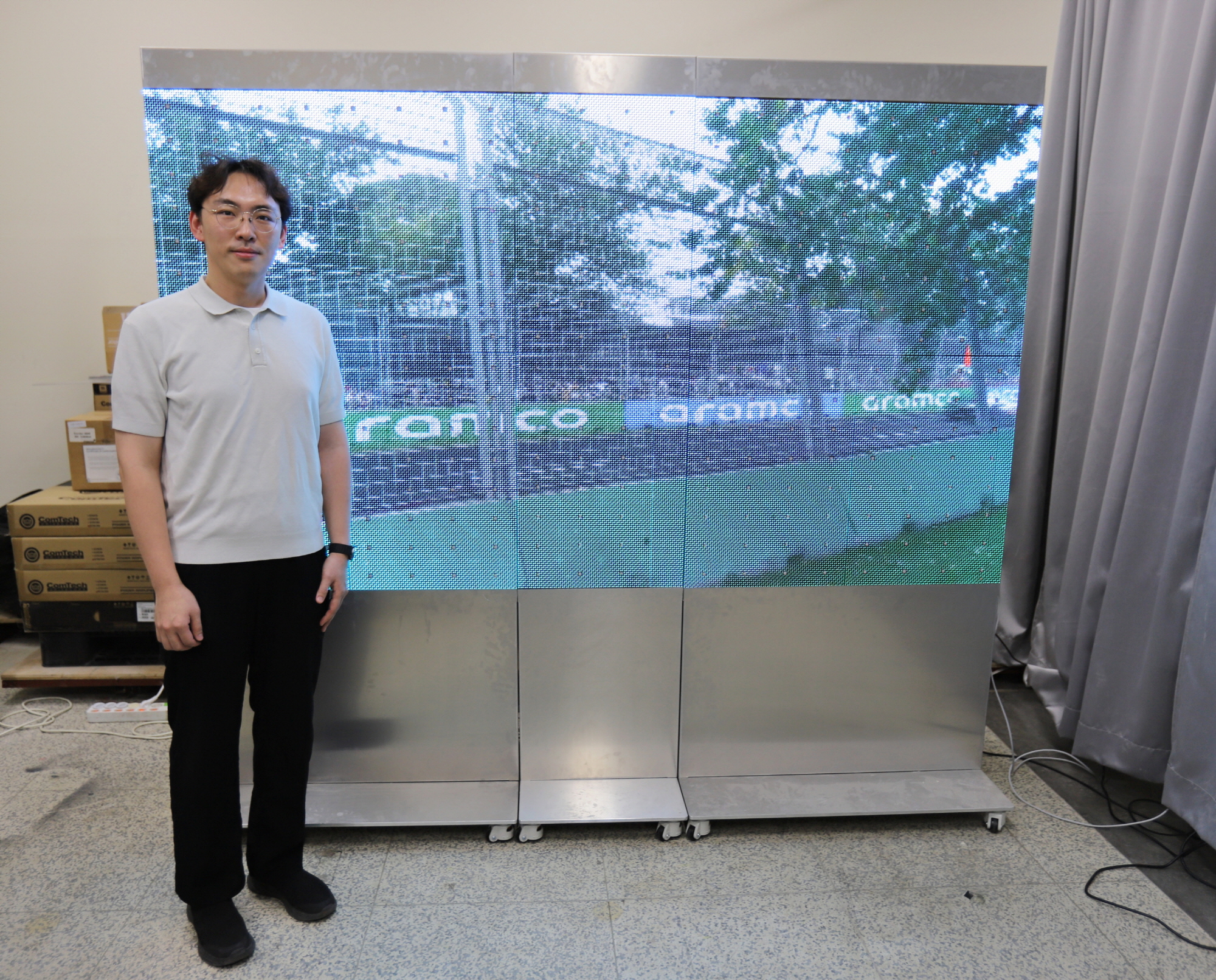
Sound Comes from Where You See It: KIMM Develops Display Technology That Reproduces Sound at On-Screen Locations | Newswise
Researchers at the Korea Institute of Machinery and Materials have developed a novel display technology that synchronises visual content with spatial audio.
The story
in brief.
What happened, who it affects, and why it landed on our intelligence desk — in plain English, sixty seconds or less.
Researchers at the Korea Institute of Machinery and Materials have developed a novel display technology that synchronises visual content with spatial audio. This innovation allows sound to originate precisely from the on-screen location of the corresponding visual element, creating a more immersive viewing experience. By integrating acoustic and visual data streams, the system reproduces directional sound without requiring external speakers. This breakthrough addresses the disconnect between sight and hearing in conventional displays, offering a more natural and engaging interface for consumers. The technology represents a significant step forward in multimedia hardware design, potentially influencing future standards for televisions, monitors, and interactive screens across various commercial applications.
Indicative index of skill mentions in professional job postings for the field this story moves (2019 = 1)
What this means
for your career.
Every headline redistributes opportunity. Here is who this one rewards — and how to be on the right side of it.
This development signals a growing convergence of audio engineering and display technology, elevating the value of skills in human-computer interaction and multimedia systems. If you work in product development or UX design, you should monitor how spatial audio influences user engagement metrics. Professionals in hardware engineering and acoustics must understand these integration challenges to remain competitive. A smart professional would explore courses in signal processing or immersive media design to grasp the technical foundations. Additionally, product managers should assess how this technology could differentiate consumer electronics in crowded markets. By anticipating shifts in sensory interfaces, you position yourself to lead projects that prioritise holistic user experiences, ensuring your career remains relevant as displays evolve beyond simple visual output into multi-sensory platforms.
For this story, the fields that convert it into pay are Engineering, Artificial Intelligence, AI in Film and Media and Innovation — exactly the programmes matched below. The chart shows the indicative salary uplift certified professionals report in each of those fields; every one of them is a click away, from £79, finishing in as few as 20 days.
Indicative ranges from published continuing-education salary studies, by field — each field is a recommended course below
Enrol in these
to benefit.
These programmes position you for exactly this shift — online, self-paced, and finishing with a verifiable certificate you can share the day you pass.
 Best match
Certificate in Engineering
 Recommended
Certificate in Artificial Intelligence
 Recommended
Certificate in AI in Film and Media
 Recommended
Certificate in Innovation
Launch pricing shown against standard certificate value. The fee you see today is the fee you lock in.
This briefing is based on reporting by Newswise on 19 Oct, 09:15. Read the original coverage →
Read the news. Then outrun it.
Every LSBR programme is online, self-paced and from £79 — so a headline today can be your credential this month.
