
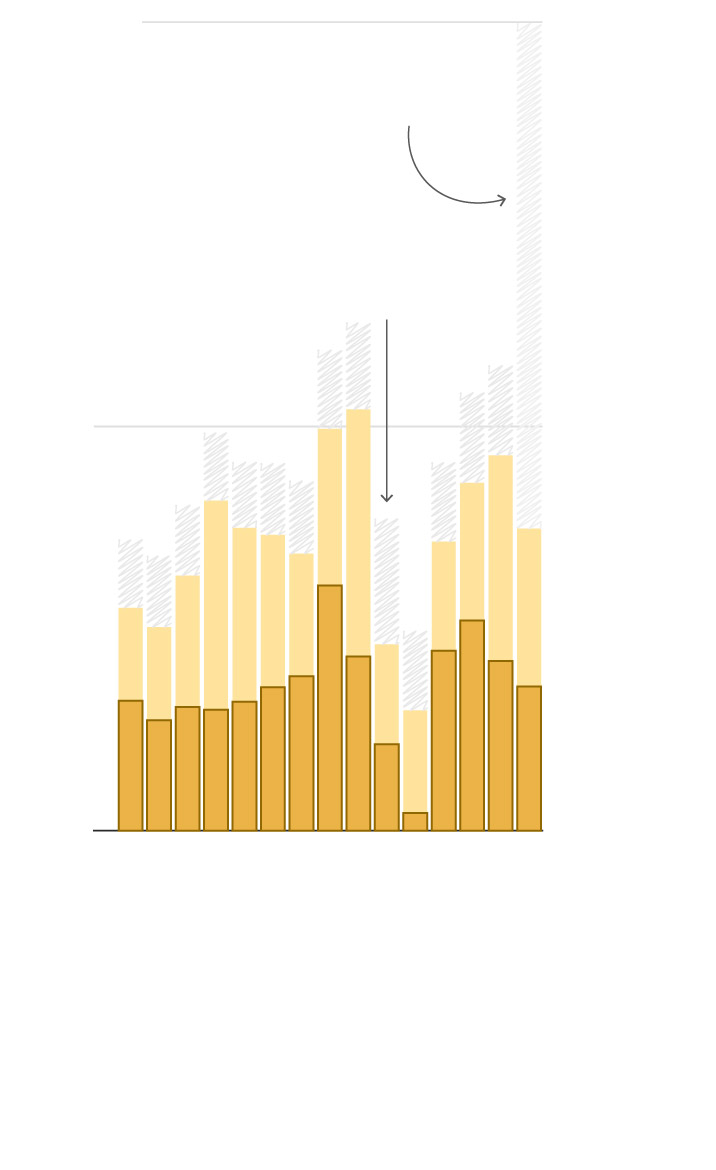
The Kennedy Center was solvent when Trump took over. Then its finances collapsed.
Recent reporting indicates that the Kennedy Center entered the Trump administration with a healthy financial position but subsequently experienced a significant collapse in its finances.
The story
in brief.
What happened, who it affects, and why it landed on our intelligence desk — in plain English, sixty seconds or less.
Recent reporting indicates that the Kennedy Center entered the Trump administration with a healthy financial position but subsequently experienced a significant collapse in its finances. This dramatic shift highlights the volatility inherent in major cultural institutions, regardless of their initial stability. For professionals, the story underscores how rapidly economic conditions can deteriorate, even for established entities. It serves as a stark reminder that prior solvency offers no guarantee against future fiscal distress, particularly when external political or economic pressures intensify. Understanding the mechanisms behind such sudden downturns is crucial for anyone operating within or adjacent to the arts and cultural sectors.
Indicative index of skill mentions in professional job postings for the field this story moves (2019 = 1)
What this means
for your career.
Every headline redistributes opportunity. Here is who this one rewards — and how to be on the right side of it.
You must recognise that financial resilience is now a core competency for every professional, not just CFOs. This collapse signals that traditional stability is illusible; you need to master risk assessment and financial oversight to survive institutional turbulence. If you work in the arts, culture, or non-profit sectors, you should immediately upskill in financial literacy and strategic planning. For others, this is a case study in crisis management. A smart professional would pursue training in risk mitigation and operational efficiency to protect their own career value. You must learn to identify early warning signs of fiscal distress and develop contingency plans. Prioritise courses that teach you how to navigate economic uncertainty, ensuring you remain indispensable when organisations face sudden financial shocks.
For this story, the fields that convert it into pay are Risk Management, Finance and Accounting, Business and Management and Public Administration — exactly the programmes matched below. The chart shows the indicative salary uplift certified professionals report in each of those fields; every one of them is a click away, from £79, finishing in as few as 20 days.
Indicative ranges from published continuing-education salary studies, by field — each field is a recommended course below
Enrol in these
to benefit.
These programmes position you for exactly this shift — online, self-paced, and finishing with a verifiable certificate you can share the day you pass.
 Best match
Certificate in Risk Management
Recommended
Certificate in Finance and Accounting
 Recommended
Certificate in Business and Management
 Recommended
Certificate in Public Administration
Launch pricing shown against standard certificate value. The fee you see today is the fee you lock in.
This briefing is based on reporting by The Washington Post on 30 Sep, 16:00. Read the original coverage →
Read the news. Then outrun it.
Every LSBR programme is online, self-paced and from £79 — so a headline today can be your credential this month.
