
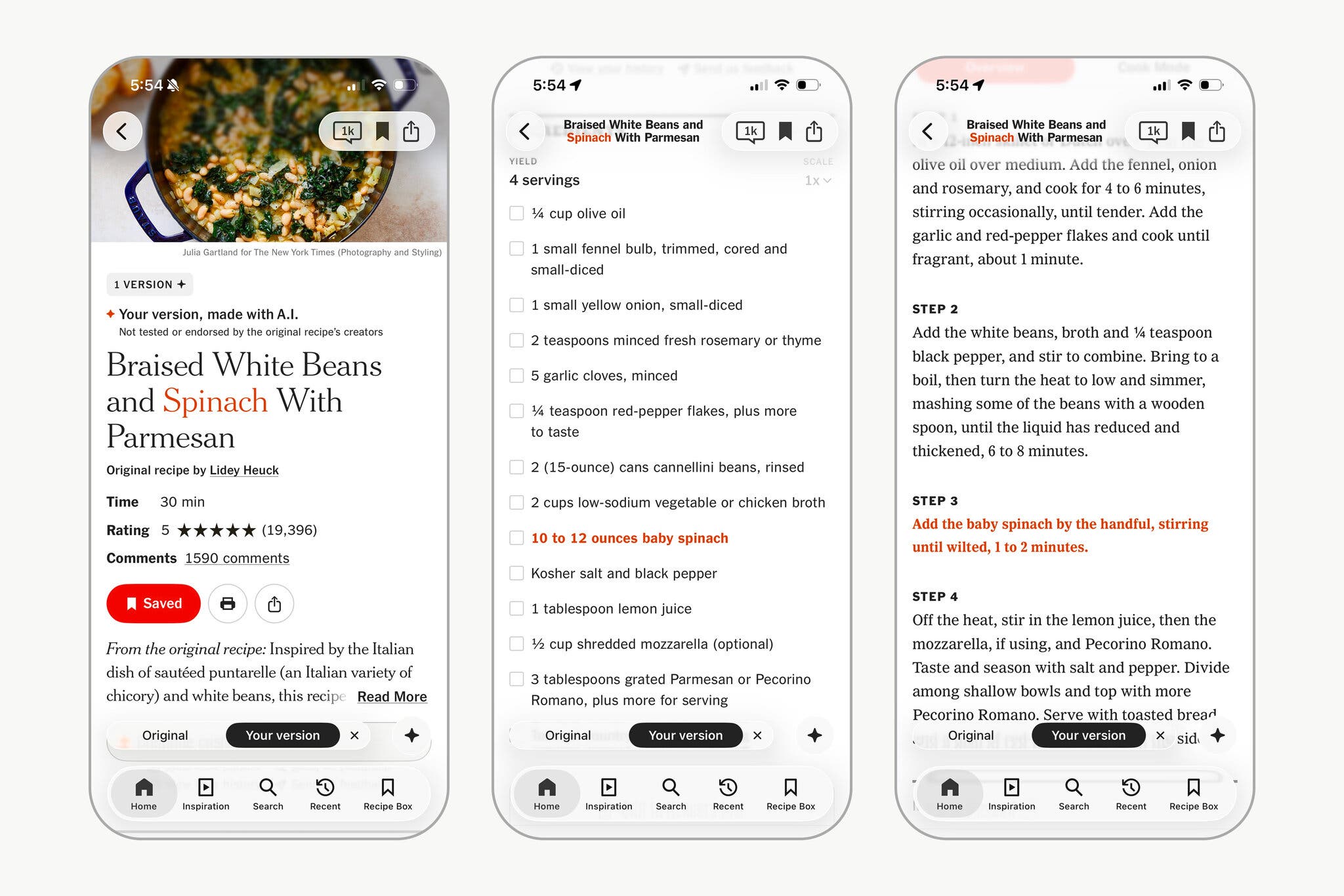
The New York Times is adding more AI features to its Cooking app, and users aren’t thrilled
The New York Times has introduced additional artificial intelligence capabilities to its Cooking application, leveraging artificial intelligence to enhance user functionality.
The story
in brief.
What happened, who it affects, and why it landed on our intelligence desk — in plain English, sixty seconds or less.
The New York Times has introduced additional artificial intelligence capabilities to its Cooking application, leveraging artificial intelligence to enhance user functionality. However, this technological integration has met with significant resistance from its subscriber base, who express dissatisfaction with the changes. The backlash highlights a growing tension between editorial innovation and user expectations in digital media consumption. For professionals, this incident serves as a critical case study in product management, illustrating the complexities of deploying AI tools in consumer-facing platforms where trust and user experience remain paramount concerns.
Indicative index of skill mentions in professional job postings for the field this story moves (2019 = 1)
What this means
for your career.
Every headline redistributes opportunity. Here is who this one rewards — and how to be on the right side of it.
You must recognise that technical proficiency alone no longer guarantees success. This backlash signals that AI implementation requires deep empathy for user experience and ethical consideration. Roles in product management, UX design, and AI ethics are rising in value. You should pay close attention to how organisations balance automation with human-centric design. A smart professional would immediately upskill in change management and stakeholder communication. Learn to articulate the human impact of algorithmic decisions. Develop the ability to translate technical AI capabilities into user benefits without alienating your audience. Master the art of gathering and integrating user feedback early in the development cycle. This ensures your AI initiatives enhance rather than hinder the customer journey, securing your relevance in a market that increasingly demands responsible innovation.
For this story, the fields that convert it into pay are AI Strategy, Product Management, User Experience Design and Change Management — exactly the programmes matched below. The chart shows the indicative salary uplift certified professionals report in each of those fields; every one of them is a click away, from £79, finishing in as few as 20 days.
Indicative ranges from published continuing-education salary studies, by field — each field is a recommended course below
Enrol in these
to benefit.
These programmes position you for exactly this shift — online, self-paced, and finishing with a verifiable certificate you can share the day you pass.
 Best match
Certificate in AI Strategy
 Recommended
Certificate in Product management
 Recommended
Certificate in User Experience Design
 Recommended
Certificate in Change Management
Launch pricing shown against standard certificate value. The fee you see today is the fee you lock in.
This briefing is based on reporting by Nieman Lab on 28 Oct, 18:54. Read the original coverage →
Read the news. Then outrun it.
Every LSBR programme is online, self-paced and from £79 — so a headline today can be your credential this month.
