
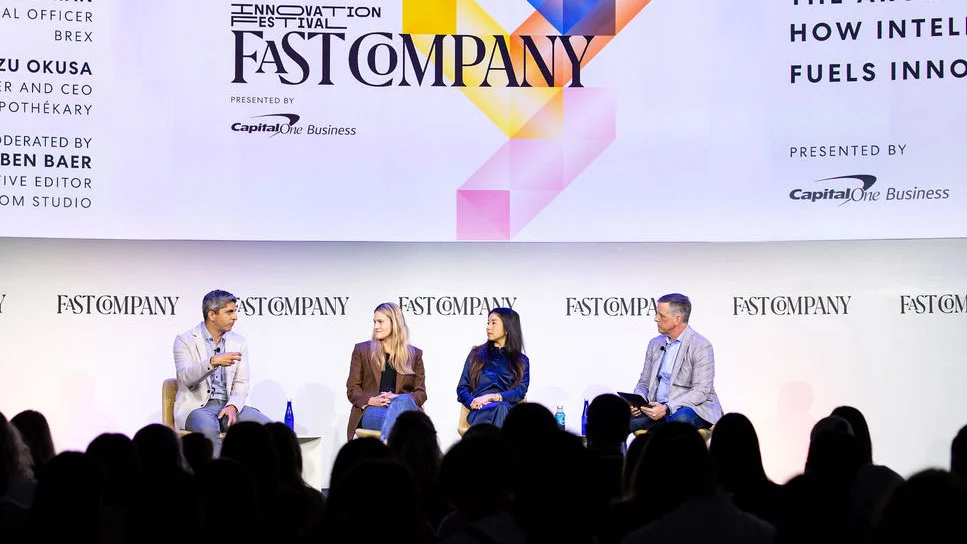
The pathway to intelligent finance
Fast Company reports on the transformative integration of artificial intelligence within the financial sector, highlighting a clear pathway towards more intelligent finance operations.
The story
in brief.
What happened, who it affects, and why it landed on our intelligence desk — in plain English, sixty seconds or less.
Fast Company reports on the transformative integration of artificial intelligence within the financial sector, highlighting a clear pathway towards more intelligent finance operations. The article details how advanced algorithms and machine learning are reshaping traditional banking, investment, and accounting practices. It examines the shift from manual processes to automated, data-driven decision-making systems. This development signifies a structural change in how financial institutions operate, prioritising efficiency, predictive analytics, and real-time risk assessment. The report outlines the current state of AI adoption in finance, noting key technological advancements and their immediate implications for industry stakeholders seeking to modernise their operational frameworks.
Indicative index of skill mentions in professional job postings for the field this story moves (2019 = 1)
What this means
for your career.
Every headline redistributes opportunity. Here is who this one rewards — and how to be on the right side of it.
This shift demands that you immediately upskill in AI-driven financial tools. Traditional accounting roles are evolving; you must master predictive analytics and automated reporting to remain relevant. Professionals in banking, investment, and corporate finance should prioritise learning how to interpret AI-generated insights rather than just processing data. You need to understand the ethical implications and risk management associated with algorithmic decision-making. A smart professional would now enrol in courses bridging finance and artificial intelligence. Focus on gaining practical experience with AI models used in trading, credit scoring, and fraud detection. Ignoring this trend risks obsolescence, while embracing it positions you as a strategic asset capable of leveraging technology for superior financial outcomes and competitive advantage.
For this story, the fields that convert it into pay are AI in Finance, Finance and Accounting, Data Science and Risk Management — exactly the programmes matched below. The chart shows the indicative salary uplift certified professionals report in each of those fields; every one of them is a click away, from £79, finishing in as few as 20 days.
Indicative ranges from published continuing-education salary studies, by field — each field is a recommended course below
Enrol in these
to benefit.
These programmes position you for exactly this shift — online, self-paced, and finishing with a verifiable certificate you can share the day you pass.
 Best match
Certificate in AI in Finance
 Recommended
Certificate in Finance and Accounting
Recommended
Certificate in Data Science
Recommended
Certificate in Risk Management
Launch pricing shown against standard certificate value. The fee you see today is the fee you lock in.
This briefing is based on reporting by Fast Company on 12 Nov, 15:29. Read the original coverage →
Read the news. Then outrun it.
Every LSBR programme is online, self-paced and from £79 — so a headline today can be your credential this month.
