
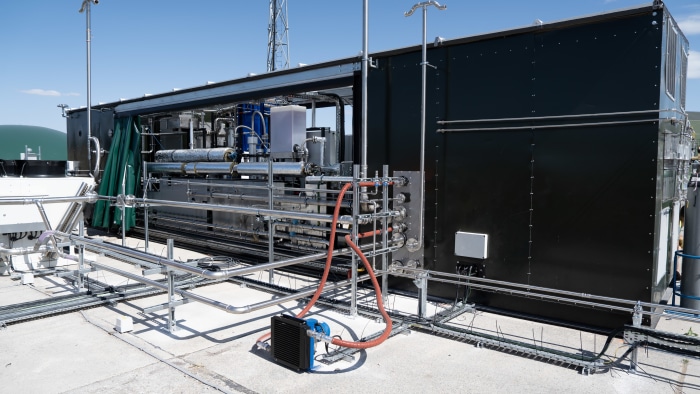
These Mini Power Plants Aim to Make Green Fuel, Using the Air Around Them
Recent reports highlight emerging technology enabling mini power plants to generate green fuel by utilising ambient air.
The story
in brief.
What happened, who it affects, and why it landed on our intelligence desk — in plain English, sixty seconds or less.
Recent reports highlight emerging technology enabling mini power plants to generate green fuel by utilising ambient air. These compact systems represent a shift towards decentralised energy production, potentially reducing reliance on traditional infrastructure. The innovation focuses on capturing atmospheric components to synthesise sustainable fuel sources, offering a scalable solution for clean energy. This development signals a growing interest in distributed power generation technologies that operate independently of large-scale grid dependencies, presenting new opportunities in the renewable energy sector.
Indicative index of skill mentions in professional job postings for the field this story moves (2019 = 1)
What this means
for your career.
Every headline redistributes opportunity. Here is who this one rewards — and how to be on the right side of it.
This development signals a shift towards decentralised energy systems, increasing demand for expertise in atmospheric chemistry and compact engineering design. You should focus on understanding the technical constraints of small-scale fuel synthesis. Professionals in energy strategy and environmental compliance must assess regulatory frameworks for these novel technologies. Upskill in project management for pilot deployments and risk assessment for unproven systems. Monitor advancements in materials science that enable efficient air-to-fuel conversion. Networking with engineers specialising in electrochemistry will provide critical insights. Consider how this technology disrupts traditional supply chains for hydrogen and synthetic fuels. Prepare to advise organisations on integrating modular energy solutions into their sustainability strategies.
For this story, the fields that convert it into pay are Engineering, AI in Energy, Project Management and Risk Management — exactly the programmes matched below. The chart shows the indicative salary uplift certified professionals report in each of those fields; every one of them is a click away, from £79, finishing in as few as 20 days.
Indicative ranges from published continuing-education salary studies, by field — each field is a recommended course below
Enrol in these
to benefit.
These programmes position you for exactly this shift — online, self-paced, and finishing with a verifiable certificate you can share the day you pass.
 Best match
Certificate in Engineering
 Recommended
Certificate in AI in Energy
 Recommended
Certificate in Project Management
Recommended
Certificate in Risk Management
Launch pricing shown against standard certificate value. The fee you see today is the fee you lock in.
This briefing is based on reporting by WSJ on 25 Oct, 14:00. Read the original coverage →
Read the news. Then outrun it.
Every LSBR programme is online, self-paced and from £79 — so a headline today can be your credential this month.
