
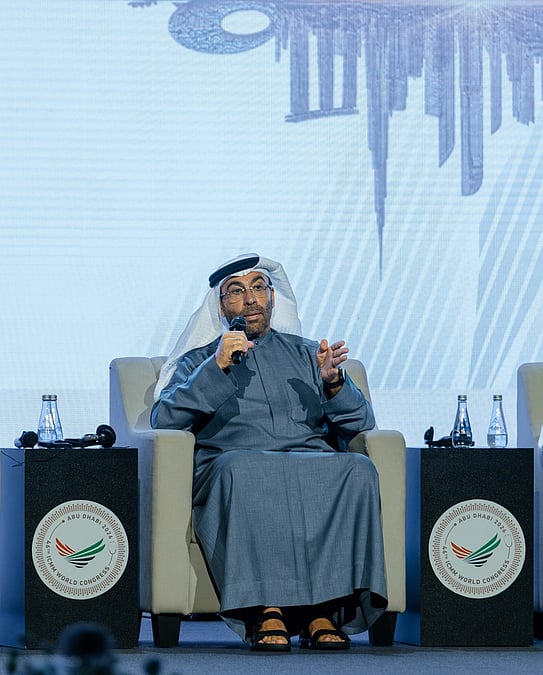
UAE Minister highlights health security as key to national resilience at Global Military Medicine Congress
The UAE Minister of State for Defence Affairs recently emphasised that health security is fundamental to national resilience during the Global Military Medicine Congress.
The story
in brief.
What happened, who it affects, and why it landed on our intelligence desk — in plain English, sixty seconds or less.
The UAE Minister of State for Defence Affairs recently emphasised that health security is fundamental to national resilience during the Global Military Medicine Congress. This high-level discourse underscores the strategic integration of medical preparedness with broader defence objectives. The event highlights the growing intersection between healthcare infrastructure and national security frameworks. For professionals, this signals a sustained governmental focus on robust health systems as critical components of state stability. The minister’s remarks reflect a wider regional trend where health emergencies are viewed through a security lens, necessitating coordinated responses across military and civilian sectors to ensure comprehensive protection and operational continuity.
Indicative index of skill mentions in professional job postings for the field this story moves (2019 = 1)
What this means
for your career.
Every headline redistributes opportunity. Here is who this one rewards — and how to be on the right side of it.
You should recognise that health security is no longer solely a clinical concern but a strategic imperative. Professionals in healthcare management, public administration, and risk management will see increased demand for expertise in crisis response and infrastructure resilience. If you work in defence or government, understanding the intersection of medical preparedness and national policy is now essential. You must prioritise skills in emergency planning, regulatory compliance, and cross-sector collaboration. Start by updating your knowledge on public health protocols and security frameworks. Consider certifications in risk management or healthcare leadership to demonstrate your ability to protect organisational continuity. Engage with networks focused on health security to anticipate policy shifts. This development rewards those who can bridge clinical operations with strategic security planning, making you indispensable in an era where health threats directly impact national stability.
For this story, the fields that convert it into pay are Healthcare Management, Risk Management, Public Administration and Occupational Health and Safety — exactly the programmes matched below. The chart shows the indicative salary uplift certified professionals report in each of those fields; every one of them is a click away, from £79, finishing in as few as 20 days.
Indicative ranges from published continuing-education salary studies, by field — each field is a recommended course below
Enrol in these
to benefit.
These programmes position you for exactly this shift — online, self-paced, and finishing with a verifiable certificate you can share the day you pass.
 Best match
Certificate in Healthcare Management
 Recommended
Certificate in Risk Management
 Recommended
Certificate in Public Administration
 Recommended
Certificate in Occupational Health and Safety
Launch pricing shown against standard certificate value. The fee you see today is the fee you lock in.
This briefing is based on reporting by Gulf News on 12 Nov, 15:02. Read the original coverage →
Read the news. Then outrun it.
Every LSBR programme is online, self-paced and from £79 — so a headline today can be your credential this month.
