
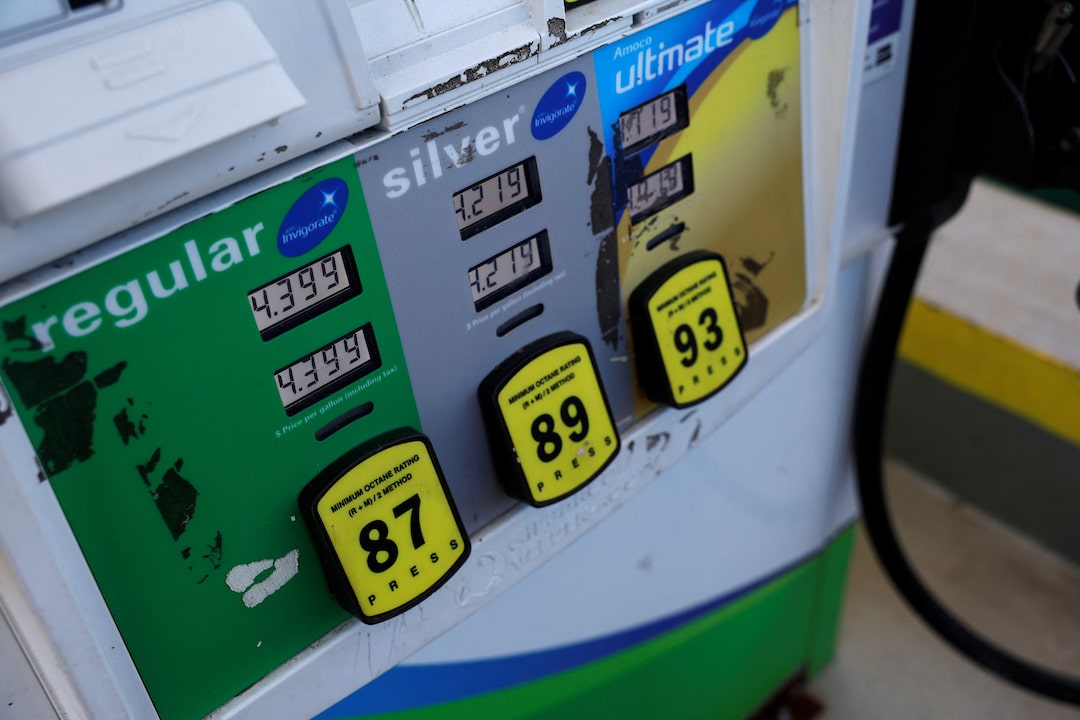
US consumers paying the most for fuel price spikes from Iran war, study says
A recent Reuters report indicates that US consumers are bearing the brunt of escalating fuel costs driven by geopolitical tensions stemming from the conflict involving Iran.
The story
in brief.
What happened, who it affects, and why it landed on our intelligence desk — in plain English, sixty seconds or less.
A recent Reuters report indicates that US consumers are bearing the brunt of escalating fuel costs driven by geopolitical tensions stemming from the conflict involving Iran. The study highlights how regional instability directly impacts global energy markets, leading to significant price spikes for petrol and diesel. This development underscores the vulnerability of everyday expenses to international political events. For professionals, it signals a period of economic volatility where inflationary pressures may persist, affecting consumer spending habits and corporate operational costs across various sectors.
Indicative index of skill mentions in professional job postings for the field this story moves (2019 = 1)
What this means
for your career.
Every headline redistributes opportunity. Here is who this one rewards — and how to be on the right side of it.
You must adapt to an environment where energy costs directly influence operational budgets and consumer behaviour. Professionals in logistics, manufacturing, and retail should prioritise supply chain resilience and cost-optimisation strategies. Risk management skills are now critical, as you need to anticipate geopolitical shocks and model their financial impact. Focus on understanding commodity markets and hedging strategies to protect your organisation’s margins. You should also develop agile decision-making capabilities to respond swiftly to sudden price fluctuations. Upskilling in data analytics will help you forecast trends and adjust pricing models effectively. Ultimately, you must demonstrate how your role contributes to mitigating external economic risks, positioning yourself as a strategic asset during times of global uncertainty.
For this story, the fields that convert it into pay are Risk Management, Supply Chain, Finance and Accounting and Business and Management — exactly the programmes matched below. The chart shows the indicative salary uplift certified professionals report in each of those fields; every one of them is a click away, from £79, finishing in as few as 20 days.
Indicative ranges from published continuing-education salary studies, by field — each field is a recommended course below
Enrol in these
to benefit.
These programmes position you for exactly this shift — online, self-paced, and finishing with a verifiable certificate you can share the day you pass.
 Best match
Certificate in Risk Management
 Recommended
Certificate in Supply Chain
Recommended
Certificate in Finance and Accounting
 Recommended
Certificate in Business and Management
Launch pricing shown against standard certificate value. The fee you see today is the fee you lock in.
This briefing is based on reporting by Reuters on 26 Oct, 20:20. Read the original coverage →
Read the news. Then outrun it.
Every LSBR programme is online, self-paced and from £79 — so a headline today can be your credential this month.
