
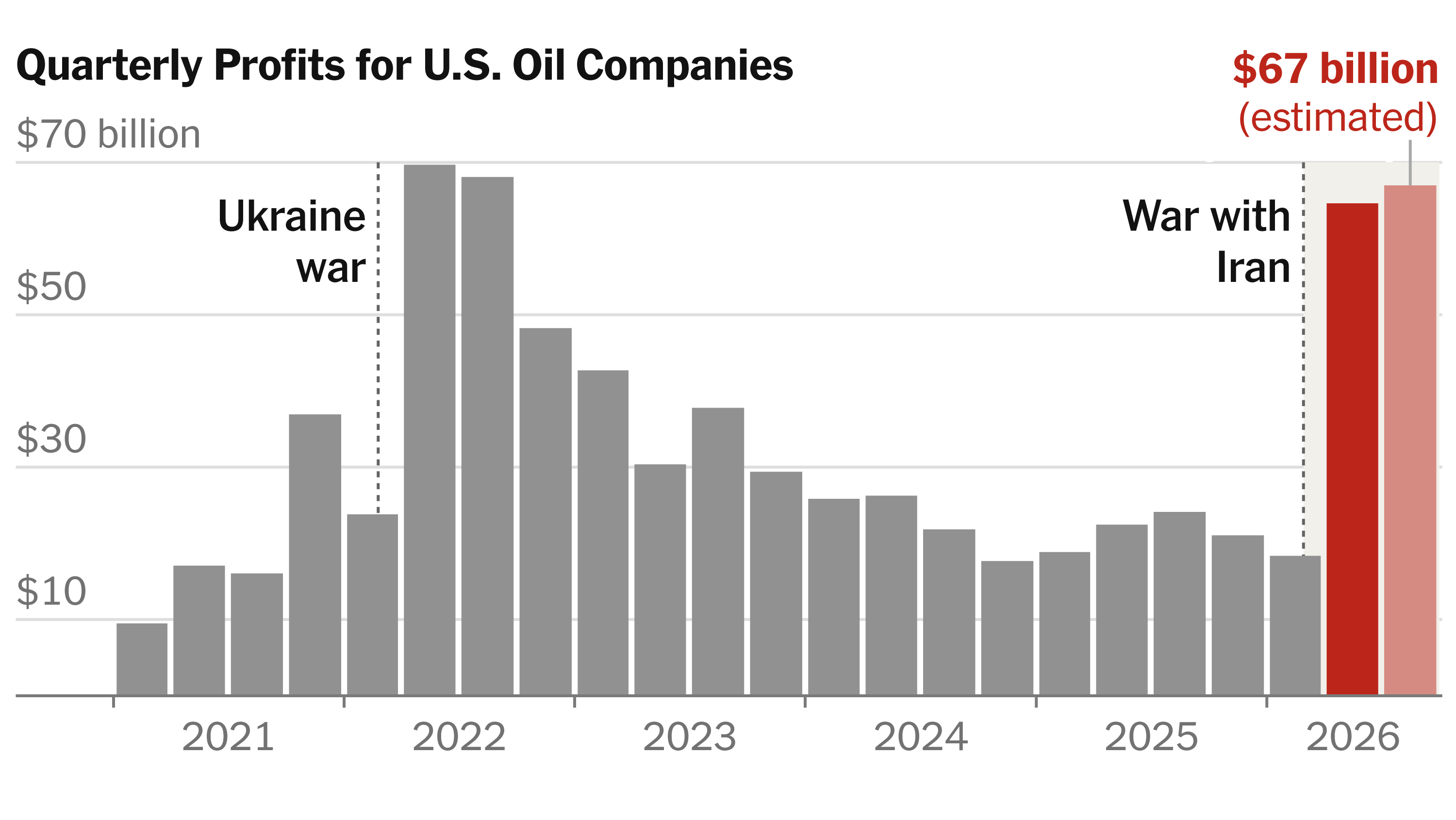
U.S. Oil Industry Earned Over $130 Billion in Profit During Iran War
Recent reporting indicates that the U.S. oil sector generated substantial profits, exceeding $130 billion, amid heightened geopolitical tensions involving Iran. This surge reflects broader market dynamics where energy prices often escalate during regional conflicts, benefiting major producers. For professionals, this highlights the continued volatility and profitability within the energy sector despite global economic shifts. Understanding these financial outcomes requires analysing how geopolitical events directly influence commodity markets and corporate earnings, offering critical insights into industry resilience and profit mechanisms during periods of international instability.
The story
in brief.
What happened, who it affects, and why it landed on our intelligence desk — in plain English, sixty seconds or less.
Recent reporting indicates that the U.S. oil sector generated substantial profits, exceeding $130 billion, amid heightened geopolitical tensions involving Iran. This surge reflects broader market dynamics where energy prices often escalate during regional conflicts, benefiting major producers. For professionals, this highlights the continued volatility and profitability within the energy sector despite global economic shifts. Understanding these financial outcomes requires analysing how geopolitical events directly influence commodity markets and corporate earnings, offering critical insights into industry resilience and profit mechanisms during periods of international instability.
Indicative index of skill mentions in professional job postings for the field this story moves (2019 = 1)
What this means
for your career.
Every headline redistributes opportunity. Here is who this one rewards — and how to be on the right side of it.
You must recognise how geopolitical instability directly fuels energy sector profitability. This development signals that expertise in risk assessment and strategic sourcing is increasingly valuable. Professionals in finance and supply chain management should monitor commodity price fluctuations closely, as they drive investment decisions. Consider upskilling in risk management to navigate volatile markets effectively. If you work in energy or related sectors, deepen your understanding of international trade dynamics. For others, this underscores the importance of diversification. Smart professionals will analyse these trends to identify emerging opportunities in logistics and financial planning, ensuring their skills remain relevant amidst global uncertainty.
For this story, the fields that convert it into pay are Risk Management, Strategic Sourcing, Finance and Accounting and Supply Chain — exactly the programmes matched below. The chart shows the indicative salary uplift certified professionals report in each of those fields; every one of them is a click away, from £79, finishing in as few as 20 days.
Indicative ranges from published continuing-education salary studies, by field — each field is a recommended course below
Enrol in these
to benefit.
These programmes position you for exactly this shift — online, self-paced, and finishing with a verifiable certificate you can share the day you pass.
 Best match
Certificate in Risk Management
 Recommended
Certificate in Strategic Sourcing
Recommended
Certificate in Finance and Accounting
Recommended
Certificate in Supply Chain
Launch pricing shown against standard certificate value. The fee you see today is the fee you lock in.
This briefing is based on reporting by The New York Times on 30 Oct, 10:35. Read the original coverage →
Read the news. Then outrun it.
Every LSBR programme is online, self-paced and from £79 — so a headline today can be your credential this month.
