
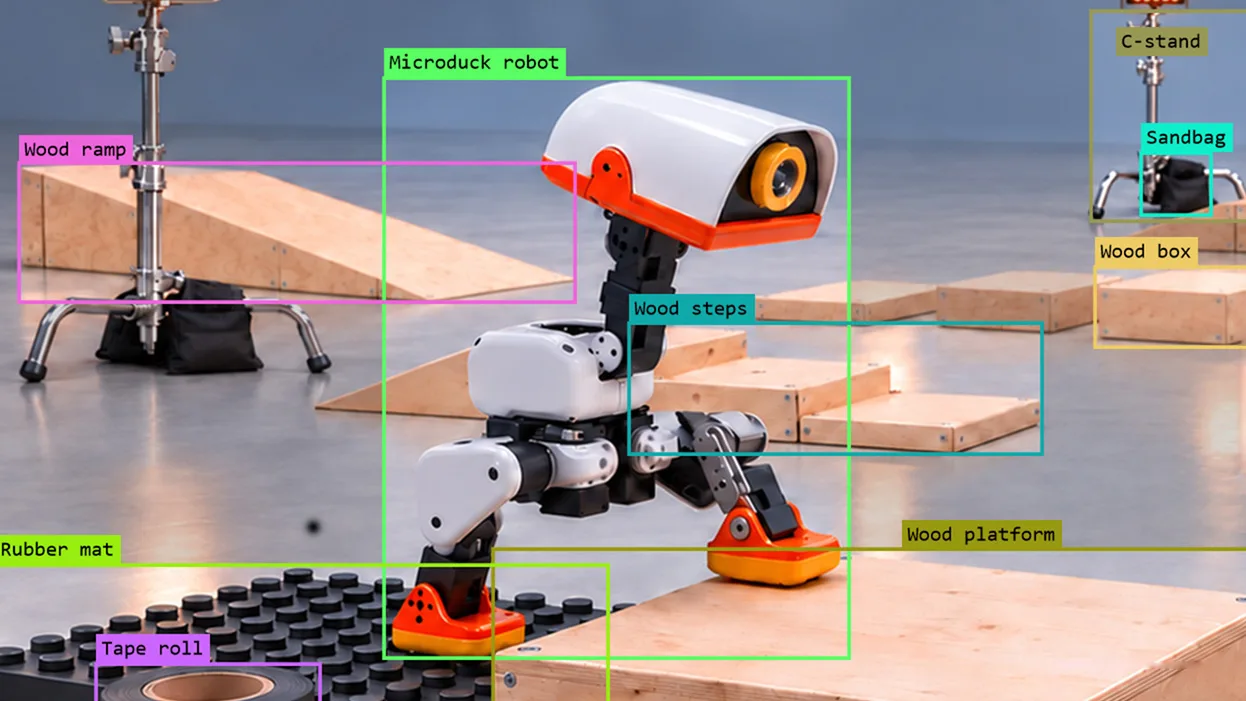
Using AI Agents to Teach Robots Like Microduck to Walk in Simulation | NVIDIA Technical Blog
NVIDIA’s latest technical blog details how AI agents are employed to teach robots, such as Microduck, to walk within simulation environments.
The story
in brief.
What happened, who it affects, and why it landed on our intelligence desk — in plain English, sixty seconds or less.
NVIDIA’s latest technical blog details how AI agents are employed to teach robots, such as Microduck, to walk within simulation environments. This approach leverages advanced computational models to accelerate motor skill acquisition without physical risk. The report highlights the integration of reinforcement learning techniques, allowing digital agents to iterate rapidly on movement strategies. For professionals, this underscores the growing sophistication of sim-to-real transfer methods in robotics. It demonstrates how high-fidelity simulations serve as critical training grounds, reducing the time and cost associated with physical prototyping. The story illustrates a concrete application of generative AI in physical systems, marking a significant step towards more autonomous and adaptable robotic solutions in industrial and research settings.
Indicative index of skill mentions in professional job postings for the field this story moves (2019 = 1)
What this means
for your career.
Every headline redistributes opportunity. Here is who this one rewards — and how to be on the right side of it.
You must now recognise that robotics development is shifting heavily towards simulation-first workflows. Traditional mechanical engineering skills remain vital, but they are increasingly secondary to proficiency in AI-driven control systems. If you work in automation or hardware, you need to understand how to validate these digital models for real-world deployment. Professionals in software development should focus on reinforcement learning frameworks and simulation platforms. Do not ignore this trend; it signals a demand for hybrid experts who bridge physical engineering with algorithmic design. Start by exploring NVIDIA’s simulation tools or similar platforms. Update your skill set to include AI agent behaviour analysis. This positions you to lead projects where software defines physical capability, making you indispensable in the evolving robotics sector.
For this story, the fields that convert it into pay are Artificial Intelligence, Engineering, AI in Manufacturing and Data Science — exactly the programmes matched below. The chart shows the indicative salary uplift certified professionals report in each of those fields; every one of them is a click away, from £79, finishing in as few as 20 days.
Indicative ranges from published continuing-education salary studies, by field — each field is a recommended course below
Enrol in these
to benefit.
These programmes position you for exactly this shift — online, self-paced, and finishing with a verifiable certificate you can share the day you pass.
 Best match
Certificate in Artificial Intelligence
 Recommended
Certificate in Engineering
 Recommended
Certificate in AI in Manufacturing
 Recommended
Certificate in Data Science
Launch pricing shown against standard certificate value. The fee you see today is the fee you lock in.
This briefing is based on reporting by NVIDIA Developer on 23 Oct, 15:10. Read the original coverage →
Read the news. Then outrun it.
Every LSBR programme is online, self-paced and from £79 — so a headline today can be your credential this month.
