
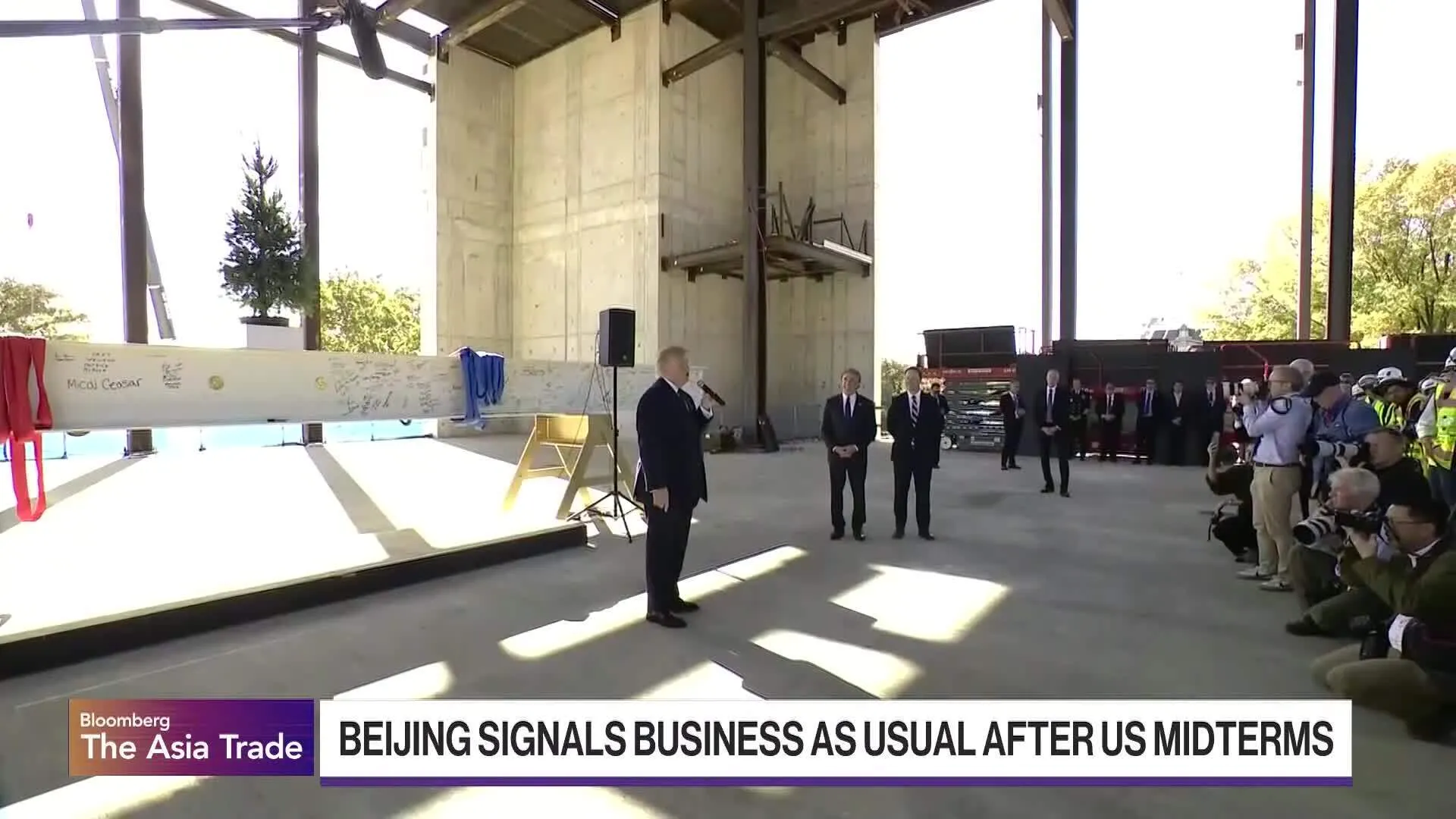
Watch Beijing Signals Business as Usual After Midterms
Recent reporting indicates that Beijing is maintaining its standard economic and diplomatic posture following the United States midterm elections.
The story
in brief.
What happened, who it affects, and why it landed on our intelligence desk — in plain English, sixty seconds or less.
Recent reporting indicates that Beijing is maintaining its standard economic and diplomatic posture following the United States midterm elections. Rather than adopting a reactive or heightened stance, Chinese authorities are signalling continuity in trade policies and international engagement. This suggests a deliberate strategy to stabilise expectations for global markets and multinational corporations operating within or alongside the Chinese economy. For professionals monitoring geopolitical shifts, this development underscores a preference for predictability over immediate strategic recalibration, implying that existing bilateral frameworks will likely remain the primary reference point for near-term business planning and operational decisions.
Indicative index of skill mentions in professional job postings for the field this story moves (2019 = 1)
What this means
for your career.
Every headline redistributes opportunity. Here is who this one rewards — and how to be on the right side of it.
You must interpret this stability as a mandate for resilience rather than expansion. With geopolitical tensions persisting but currently managed through routine channels, your value lies in navigating complex regulatory environments without disruption. Prioritise skills in cross-cultural negotiation and international compliance. Professionals in supply chain management and finance should audit their exposure to Sino-US trade dynamics, ensuring contingency plans are robust. Do not assume this calm is permanent; instead, use this period to deepen your understanding of Asian market regulations. Invest in courses that sharpen your ability to analyse political risk within commercial contexts. Your next step is to review your organisation’s current risk assessment frameworks, identifying gaps where subtle policy shifts could impact operations, and propose proactive mitigation strategies to your leadership team.
For this story, the fields that convert it into pay are Risk Management, Supply Chain, Business and Management and Finance and Accounting — exactly the programmes matched below. The chart shows the indicative salary uplift certified professionals report in each of those fields; every one of them is a click away, from £79, finishing in as few as 20 days.
Indicative ranges from published continuing-education salary studies, by field — each field is a recommended course below
Enrol in these
to benefit.
These programmes position you for exactly this shift — online, self-paced, and finishing with a verifiable certificate you can share the day you pass.
 Best match
Certificate in Risk Management
 Recommended
Certificate in Supply Chain
 Recommended
Certificate in Business and Management
Recommended
Certificate in Finance and Accounting
Launch pricing shown against standard certificate value. The fee you see today is the fee you lock in.
This briefing is based on reporting by Bloomberg.com on 5 Nov, 00:00. Read the original coverage →
Read the news. Then outrun it.
Every LSBR programme is online, self-paced and from £79 — so a headline today can be your credential this month.
