
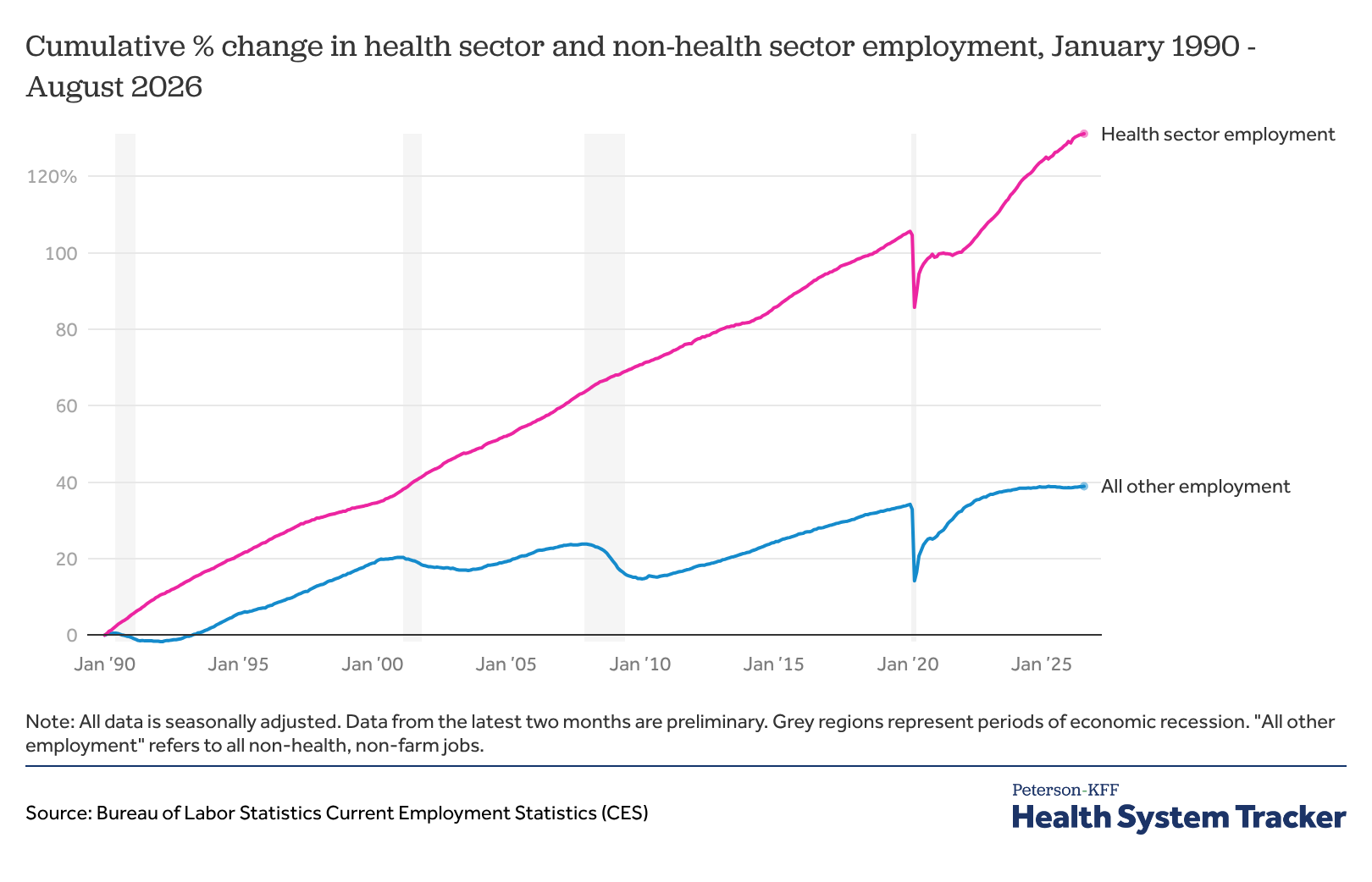
What are the recent trends in health sector employment?
Recent data from Health System Tracker highlights shifting employment patterns within the health sector, reflecting broader economic pressures and demographic changes.
The story
in brief.
What happened, who it affects, and why it landed on our intelligence desk — in plain English, sixty seconds or less.
Recent data from Health System Tracker highlights shifting employment patterns within the health sector, reflecting broader economic pressures and demographic changes. The report indicates fluctuating demand across clinical and administrative roles, with notable variations in hiring rates for nursing, allied health professions, and support staff. These trends underscore the increasing complexity of workforce planning in healthcare settings, as organisations navigate budget constraints alongside rising patient needs. Professionals should note the divergence between high-demand specialised roles and those facing stagnation, suggesting a dynamic job market requiring adaptability and strategic career positioning to remain competitive.
Indicative index of skill mentions in professional job postings for the field this story moves (2019 = 1)
What this means
for your career.
Every headline redistributes opportunity. Here is who this one rewards — and how to be on the right side of it.
This development signals that clinical expertise alone is no longer sufficient for career resilience. You must pivot towards roles that integrate operational efficiency with patient care. Skills in data analytics and healthcare management are rising sharply in value, as organisations seek to optimise resources amid financial strain. If you are in a support or administrative role, upskill immediately in digital health tools and workflow optimisation. For clinicians, understanding the business side of healthcare is now critical. A smart professional would audit their current skill set against these emerging demands, prioritising certifications in Health and Social Care or Healthcare Management. Focus on roles that bridge clinical practice with strategic oversight to future-proof your career against continued volatility.
For this story, the fields that convert it into pay are Healthcare Management, Health and Social Care, Data analytics and Business analysis — exactly the programmes matched below. The chart shows the indicative salary uplift certified professionals report in each of those fields; every one of them is a click away, from £79, finishing in as few as 20 days.
Indicative ranges from published continuing-education salary studies, by field — each field is a recommended course below
Enrol in these
to benefit.
These programmes position you for exactly this shift — online, self-paced, and finishing with a verifiable certificate you can share the day you pass.
 Best match
Certificate in Healthcare Management
 Recommended
Certificate in Health and Social Care
 Recommended
Certificate in Data analytics
 Recommended
Certificate in Business analysis
Launch pricing shown against standard certificate value. The fee you see today is the fee you lock in.
This briefing is based on reporting by healthsystemtracker.org on 30 Sep, 07:00. Read the original coverage →
Read the news. Then outrun it.
Every LSBR programme is online, self-paced and from £79 — so a headline today can be your credential this month.
