
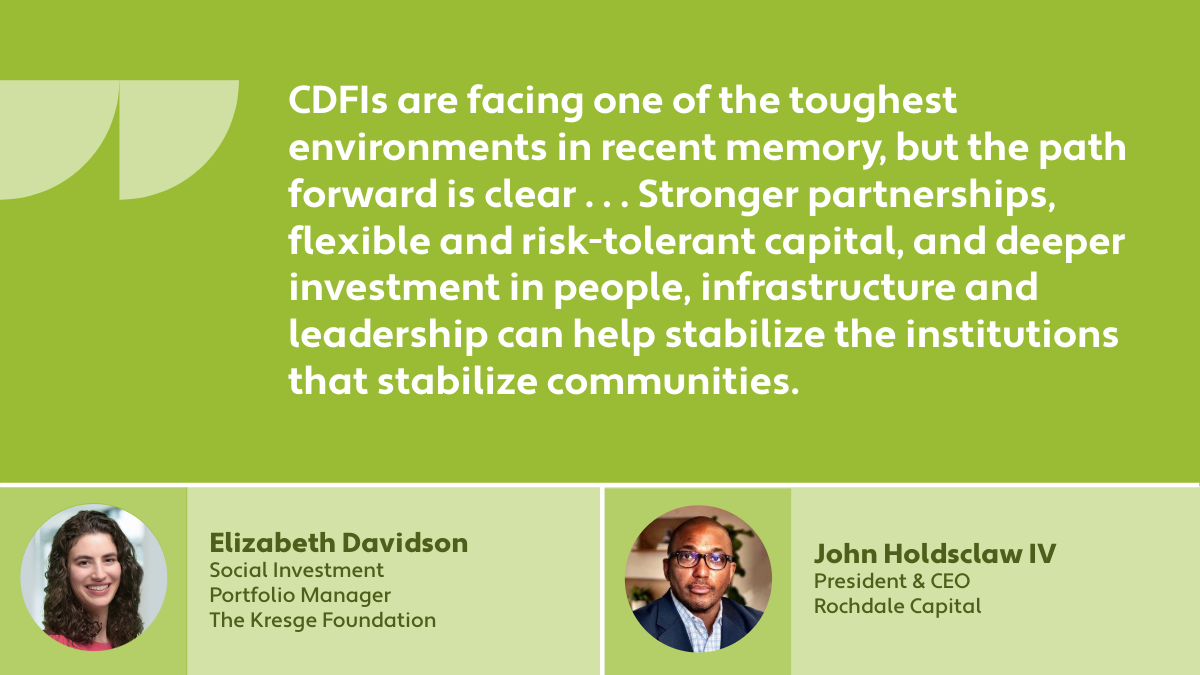
What the community finance sector needs to stabilize small CDFIs carrying the hardest work
The Kresge Foundation highlights critical analysis addresses structural challenges facing small Community Development Financial Institutions (CDFIs) undertaking complex community finance work.
The story
in brief.
What happened, who it affects, and why it landed on our intelligence desk — in plain English, sixty seconds or less.
The Kresge Foundation highlights critical analysis addresses structural challenges facing small Community Development Financial Institutions (CDFIs) undertaking complex community finance work. The report identifies systemic gaps in capital access and operational support that hinder these organisations' stability. It calls for targeted interventions to strengthen the sector’s infrastructure, ensuring sustainable delivery of financial services to underserved populations. This development signals a shift towards greater institutional support for smaller players in the community finance ecosystem, emphasising the need for robust frameworks to sustain high-impact, localised economic development initiatives.
Indicative index of skill mentions in professional job postings for the field this story moves (2019 = 1)
What this means
for your career.
Every headline redistributes opportunity. Here is who this one rewards — and how to be on the right side of it.
You must recognise that community finance is shifting towards greater structural complexity and regulatory scrutiny. Small CDFIs require professionals who can navigate sophisticated risk management and capital structuring, not just basic lending. Your skills in financial analysis, compliance, and strategic resource allocation will rise in value. If you work in or aspire to join the social impact or community finance sector, you should focus on understanding non-profit financial sustainability and regulatory frameworks. A smart professional would immediately upskill in financial modelling and risk assessment to support these institutions. Prioritise certifications or courses that enhance your ability to secure funding and manage operational risks, positioning yourself as a stabilising force in this critical sector.
For this story, the fields that convert it into pay are Finance and Accounting, Risk Management, Business and Management and Public Administration — exactly the programmes matched below. The chart shows the indicative salary uplift certified professionals report in each of those fields; every one of them is a click away, from £79, finishing in as few as 20 days.
Indicative ranges from published continuing-education salary studies, by field — each field is a recommended course below
Enrol in these
to benefit.
These programmes position you for exactly this shift — online, self-paced, and finishing with a verifiable certificate you can share the day you pass.
 Best match
Certificate in Finance and Accounting
Recommended
Certificate in Risk Management
 Recommended
Certificate in Business and Management
 Recommended
Certificate in Public Administration
Launch pricing shown against standard certificate value. The fee you see today is the fee you lock in.
This briefing is based on reporting by Kresge Foundation on 30 Sep, 18:41. Read the original coverage →
Read the news. Then outrun it.
Every LSBR programme is online, self-paced and from £79 — so a headline today can be your credential this month.
